Most women expect menopause to arrive somewhere in their early to mid-fifties. So when changes begin in their late thirties or early forties — irregular periods, sleepless nights, inexplicable mood swings, brain fog — they rarely connect them to hormonal transition. Neither, unfortunately, do many doctors, who dismiss these symptoms as stress, anxiety, or thyroid problems without considering the most likely culprit: perimenopause. Dr. Shweta Mendiratta, menopause specialist in Faridabad, explains what perimenopause is, why it is so often missed, and what women can do about it.
What Is Perimenopause?
Perimenopause is the transitional phase leading up to menopause — the permanent cessation of menstruation. It typically begins 4–8 years before the last menstrual period. For most women, this means perimenopause starts between ages 40 and 51, though it can begin as early as the late thirties.
Menopause itself is defined as 12 consecutive months without a period. Perimenopause is everything before that point. During this phase, the ovaries gradually produce less oestrogen and progesterone, and ovulation becomes irregular.
Why Perimenopause Is Missed in India
Several factors contribute to the underdiagnosis of perimenopause in Indian women:
- Cultural normalisation of suffering: Mood changes, fatigue, and physical discomfort are often attributed to work stress, family responsibilities, or simply ‘getting older.’
- Lack of awareness: Perimenopause is rarely discussed openly in Indian families or medical consultations.
- Symptom overlap: Perimenopause symptoms mimic thyroid disease, depression, anxiety, anaemia, and other common conditions.
- Diagnostic bias: Doctors often treat the individual symptoms (sleeping tablets for insomnia, antidepressants for mood changes) without considering the underlying hormonal cause.
Symptoms of Perimenopause — The Complete Picture
Menstrual Changes
- Irregular periods — cycles becoming shorter (less than 21 days) or longer (more than 35 days)
- Heavier or lighter than usual periods
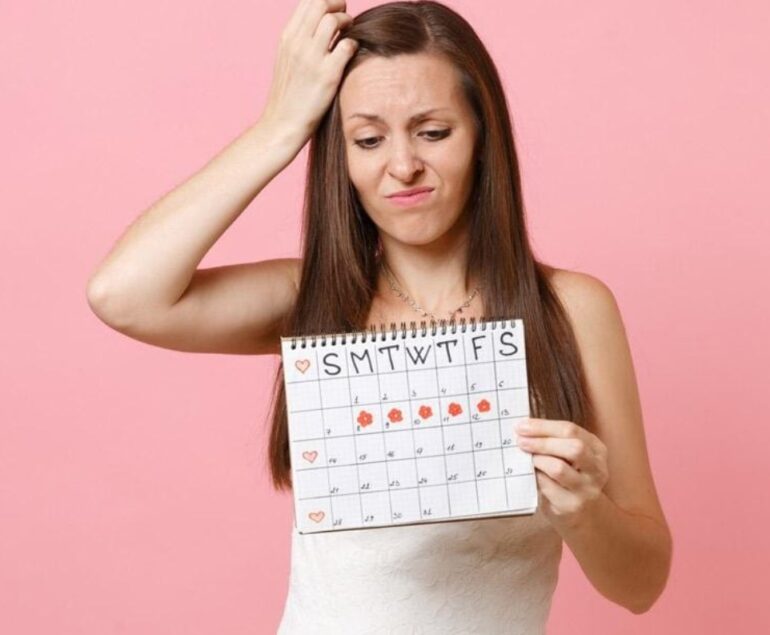
- Missed periods — often mistaken for pregnancy
- Intermenstrual spotting
Vasomotor Symptoms
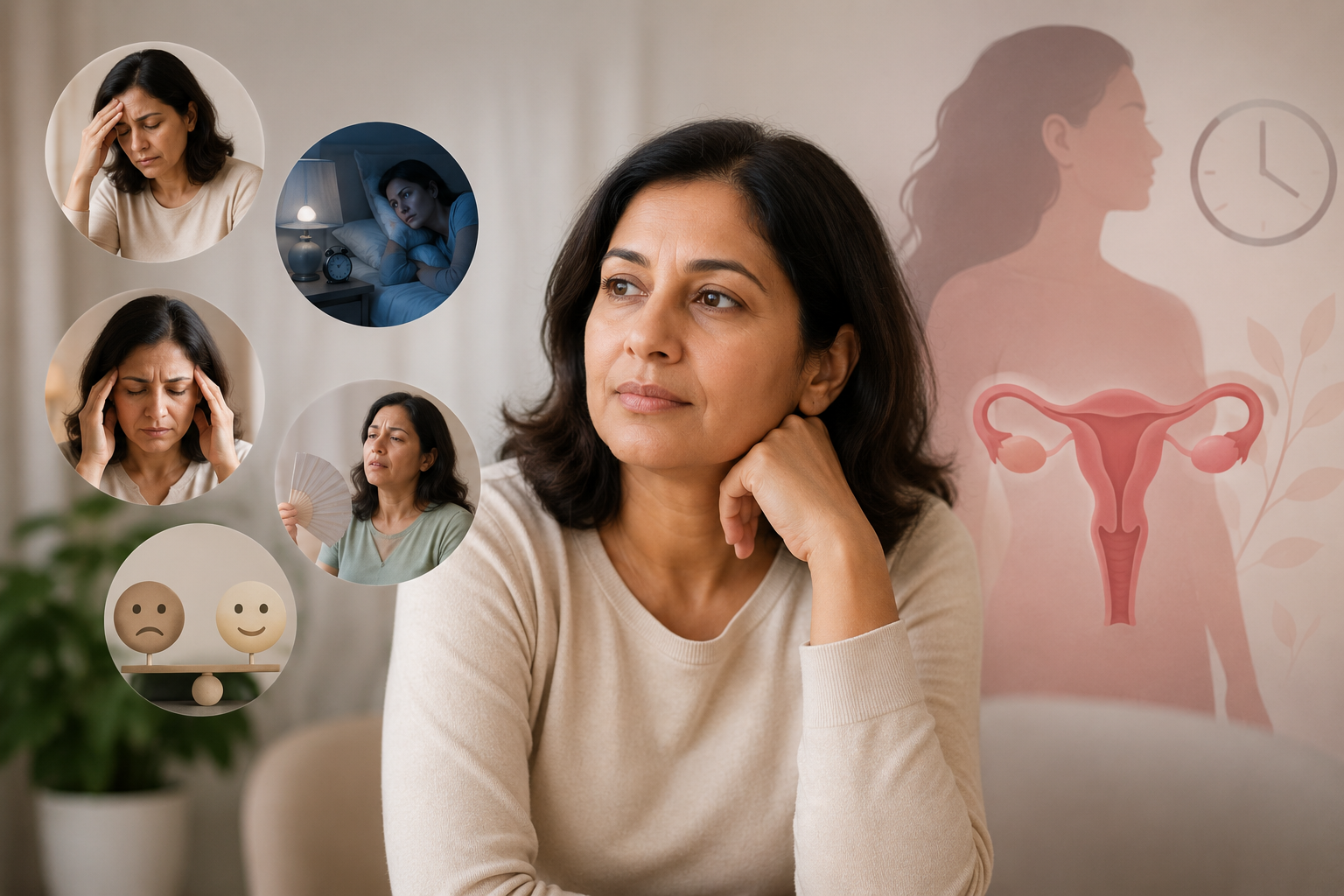
- Hot flushes: Sudden waves of heat, typically in the face, neck, and chest, often accompanied by sweating
- Night sweats: Drenching sweats during sleep, leading to disturbed sleep and chronic fatigue
Sleep Disturbances
Many perimenopausal women develop insomnia — difficulty falling asleep, frequent waking, or early morning waking — that has no other apparent cause. This is directly linked to falling oestrogen and progesterone levels.
Mood and Cognitive Changes
- Increased anxiety, irritability, or emotional lability
- Low mood or mild depression
- Brain fog: Difficulty concentrating, poor short-term memory, word-finding difficulties
These symptoms are frequently misattributed to clinical depression or anxiety disorder and treated with antidepressants or anxiolytics when hormone therapy would be more appropriate.
Physical Symptoms
- Vaginal dryness and reduced lubrication (genitourinary syndrome of menopause)
- Reduced libido
- Joint and muscle aches
- Headaches
- Changes in skin (increased dryness, loss of elasticity)
- Weight gain, particularly around the abdomen
How Is Perimenopause Diagnosed?
Perimenopause is primarily a clinical diagnosis based on age, symptoms, and menstrual history. Blood tests can be supportive but are not always definitive, particularly in early perimenopause when hormone levels fluctuate widely:
- FSH: Rising FSH (above 10 IU/L, particularly above 25 IU/L) suggests reduced ovarian reserve
- Oestradiol: Fluctuating, often lower than expected
- AMH: Declining; a very low AMH in a symptomatic woman in her 40s is consistent with perimenopause
- Thyroid function: Essential to rule out as a contributing factor
- Full blood count: To exclude anaemia as a cause of fatigue
What Women Can Do
Lifestyle Measures
- Regular strength training and weight-bearing exercise (to protect bone density and muscle mass)
- Aerobic exercise (to improve cardiovascular health and mood)
- Reducing alcohol and caffeine (which worsen hot flushes and sleep disruption)
- Adequate calcium and vitamin D intake
- Stress management through yoga, mindfulness, or counselling
Hormone Replacement Therapy (HRT)
For women with significant perimenopausal symptoms, HRT is the most effective treatment. Modern HRT — using body-identical hormones at the lowest effective dose — is safe for most women under 60 who begin it within 10 years of menopause. Dr. Mendiratta provides individualised HRT assessment and prescribing, including discussion of risks and benefits in the context of your personal health history.
Non-Hormonal Options
For women who cannot or prefer not to use HRT, several non-hormonal options help manage specific symptoms:
- SSRIs/SNRIs: For hot flushes and mood symptoms
- Clonidine: For hot flushes
- Cognitive behavioural therapy (CBT): Highly effective for mood and sleep disturbances
- Vaginal oestrogen: Safe even for women who cannot use systemic HRT; treats genitourinary symptoms locally
Frequently Asked Questions (FAQs)
Q1. Can I get pregnant during perimenopause?
Yes. Ovulation still occurs intermittently during perimenopause, and pregnancy is possible. Contraception should be continued until you have had 12 consecutive months without a period (i.e., confirmed menopause) or until age 55.
Q2. What is the difference between perimenopause and premature ovarian insufficiency (POI)?
POI (previously called premature menopause) occurs before age 40. Perimenopause is a natural transition that begins in the 40s. Both are characterised by declining ovarian function, but POI is less expected and has different implications for fertility and bone health.
Q3. How long does perimenopause last?
On average, 4–8 years, but it can be shorter or longer. Symptoms may be most intense in the 1–2 years just before the last period.
Q4. Is it normal to have periods every 2 weeks during perimenopause?
Irregular cycles, including short cycles, are common in perimenopause. However, very frequent or heavy bleeding should be evaluated to rule out fibroids, polyps, or endometrial abnormalities.
Q5. Does perimenopause affect bone health?
Yes. The decline in oestrogen during perimenopause accelerates bone loss. This is a key reason why calcium, vitamin D, weight-bearing exercise, and HRT (when appropriate) are important during this phase.
Get In Touch With Dr. Shweta Mendiratta
Phone: +91-8130048652 | +91-9999093503
Email: shwetasmendiratta@gmail.com
Yatharth Super Speciality Hospital
Plot No 9, Sector-20, Krishna Nagar, New Industrial Township, Faridabad, Haryana 121007
Phone: +91 8178-939442
Mediclub Gynae ‘N’ Neuro Clinic
Plot No. 857 Sector 21 C, Faridabad Delhi, Haryana 121001