
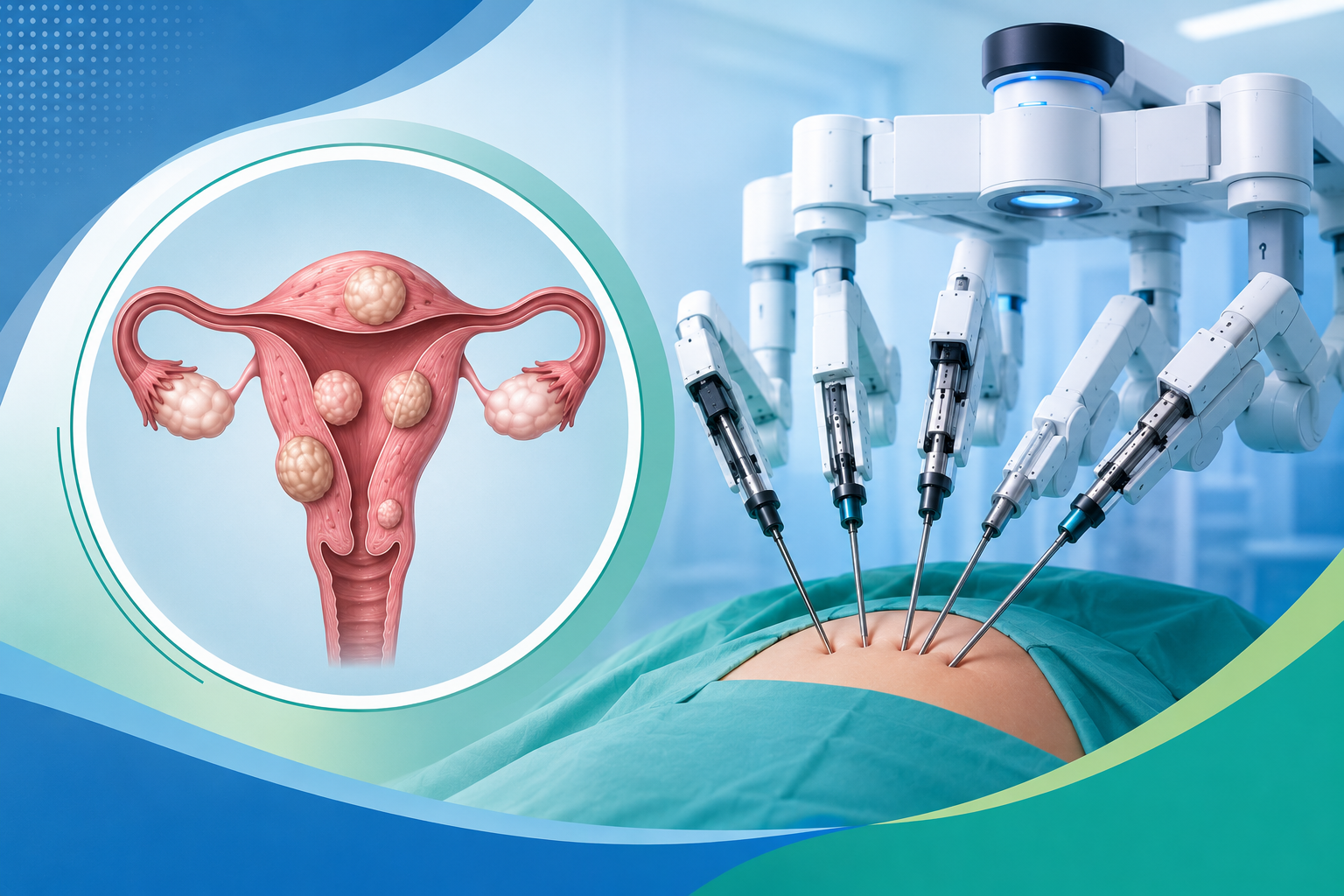
Robotic Myomectomy for Fibroids — Preserving the Uterus Without Open Surgery

Uterine fibroids are extraordinarily common — they affect up to 70% of women by age 50, though not all cause symptoms. For women who have problematic fibroids but wish to preserve their uterus — whether for future pregnancy, personal preference, or cultural reasons — myomectomy (surgical removal of fibroids while keeping the uterus intact) is the answer. And today, thanks to robotic and laparoscopic technology, myomectomy can be performed with minimal incisions, minimal blood loss, and a rapid return to normal life. Dr. Shweta Mendiratta, robotic surgeon in Faridabad, explains everything you need to know.

What Are Uterine Fibroids?

Fibroids (leiomyomas or myomas) are non-cancerous growths arising from the muscle tissue of the uterus. They vary enormously in size — from a few millimetres to several centimetres — and in location:

  • Intramural: Within the uterine muscle wall (most common)
  • Submucosal: Projecting into the uterine cavity (most likely to cause heavy bleeding and fertility problems)
  • Subserosal: Projecting outward from the uterine surface
  • Pedunculated: Attached to the uterus by a stalk

A woman may have a single fibroid or many (multiple fibroids), and the distribution matters for surgical planning.

When Do Fibroids Need Treatment?

Many fibroids are asymptomatic and require no treatment beyond monitoring. Treatment is recommended when fibroids cause:

  • Heavy or prolonged menstrual bleeding (leading to anaemia)
  • Pelvic pain or pressure
  • Urinary frequency or difficulty emptying the bladder
  • Constipation or rectal pressure
  • Difficulty conceiving or recurrent miscarriage
  • Significant uterine enlargement

Why Choose Myomectomy Over Hysterectomy?

Hysterectomy — uterine removal — is the definitive cure for fibroids, but it ends a woman’s ability to conceive and many women prefer to preserve their uterus. Myomectomy removes the fibroids while leaving the uterus intact, allowing future pregnancy and preserving the uterus for women who are not yet ready for hysterectomy.

The trade-off is that fibroids can recur after myomectomy — approximately 20–30% of women require further treatment within 5–10 years. However, for women who want to conceive or who are years away from menopause, myomectomy is often the right choice.

Types of Myomectomy

Hysteroscopic Myomectomy

For submucosal fibroids (those inside the cavity), the fibroid can often be removed entirely through the cervix using a hysteroscope — no incisions at all. This is an outpatient procedure with very rapid recovery. It is the preferred approach for submucosal fibroids causing heavy bleeding or fertility problems.

Laparoscopic Myomectomy

For intramural or subserosal fibroids, laparoscopic myomectomy uses 3–4 small port incisions to access and remove the fibroid. The fibroid is then morcellated (divided into smaller pieces) for removal through the ports, or removed through a small incision using a containment bag.

Robotic Myomectomy

Robotic myomectomy offers particular advantages for large fibroids, multiple fibroids, or fibroids in difficult locations. The robotic system allows:

  • Precise dissection with 3D visualisation
  • Multi-directional instrument movement (wristed instruments) that exceeds the range of human wrists
  • Superior suturing ability — critical for closing the uterine defect securely after fibroid removal
  • Reduced blood loss through more precise haemostasis

Secure uterine closure after myomectomy is critical for subsequent pregnancy safety. The robotic platform enables suturing that is as precise — or more precise — than open surgery, which is why robotic myomectomy is increasingly preferred for women planning future pregnancies.

Open (Abdominal) Myomectomy

Reserved for very large uteri, very numerous fibroids, or cases where minimal-access surgery is not feasible. Recovery is 6–8 weeks.

Myomectomy and Fertility

Removing fibroids that distort the uterine cavity or impair blood supply to the lining can significantly improve fertility. Studies show that myomectomy for submucosal fibroids improves IVF pregnancy rates substantially. Dr. Mendiratta carefully plans the procedure to maximise fertility outcomes — avoiding unnecessary myometrial trauma and ensuring meticulous repair.

Recovery After Robotic Myomectomy

  • 1–2 nights in hospital
  • 2–3 weeks to return to light activity
  • 4–6 weeks to full recovery
  • Pregnancy is typically recommended no sooner than 3–6 months after myomectomy, to allow adequate uterine healing

Frequently Asked Questions (FAQs)

Q1. Can fibroids become cancerous?

The risk of a uterine fibroid being or becoming malignant (leiomyosarcoma) is very small — approximately 1 in 1000. However, if a fibroid grows rapidly (especially after menopause), further investigation is warranted.

Q2. Will fibroids grow back after myomectomy?

Existing fibroids are permanently removed, but new ones can develop. The recurrence rate is approximately 20–30% over 5–10 years. After menopause, regrowth is very unlikely as fibroids depend on oestrogen.

Q3. Can I deliver vaginally after myomectomy?

This depends on the size, depth, and location of the fibroid removed and the extent of the uterine incision. Dr. Mendiratta will advise you on the safest mode of delivery after reviewing your surgical notes.

Q4. Does fibroid size matter for surgery?

Yes and no. Even very large fibroids can be removed laparoscopically or robotically by experienced surgeons. However, a very enlarged uterus (larger than a 16-week pregnancy) may sometimes require an open approach.

Q5. How long after myomectomy can I try to conceive?

Dr. Mendiratta typically recommends waiting 3–6 months after myomectomy before attempting pregnancy, to allow adequate uterine healing and reduce the risk of uterine rupture during labour.


Get In Touch With Dr. Shweta Mendiratta

Phone: +91-8130048652 | +91-9999093503

Email: shwetasmendiratta@gmail.com

Yatharth Super Speciality Hospital

Plot No 9, Sector-20, Krishna Nagar, New Industrial Township, Faridabad, Haryana 121007

Phone: +91 8178-939442

Mediclub Gynae ‘N’ Neuro Clinic

Pilot No. 857 Sector 21 C, Faridabad Delhi, Haryana 121001
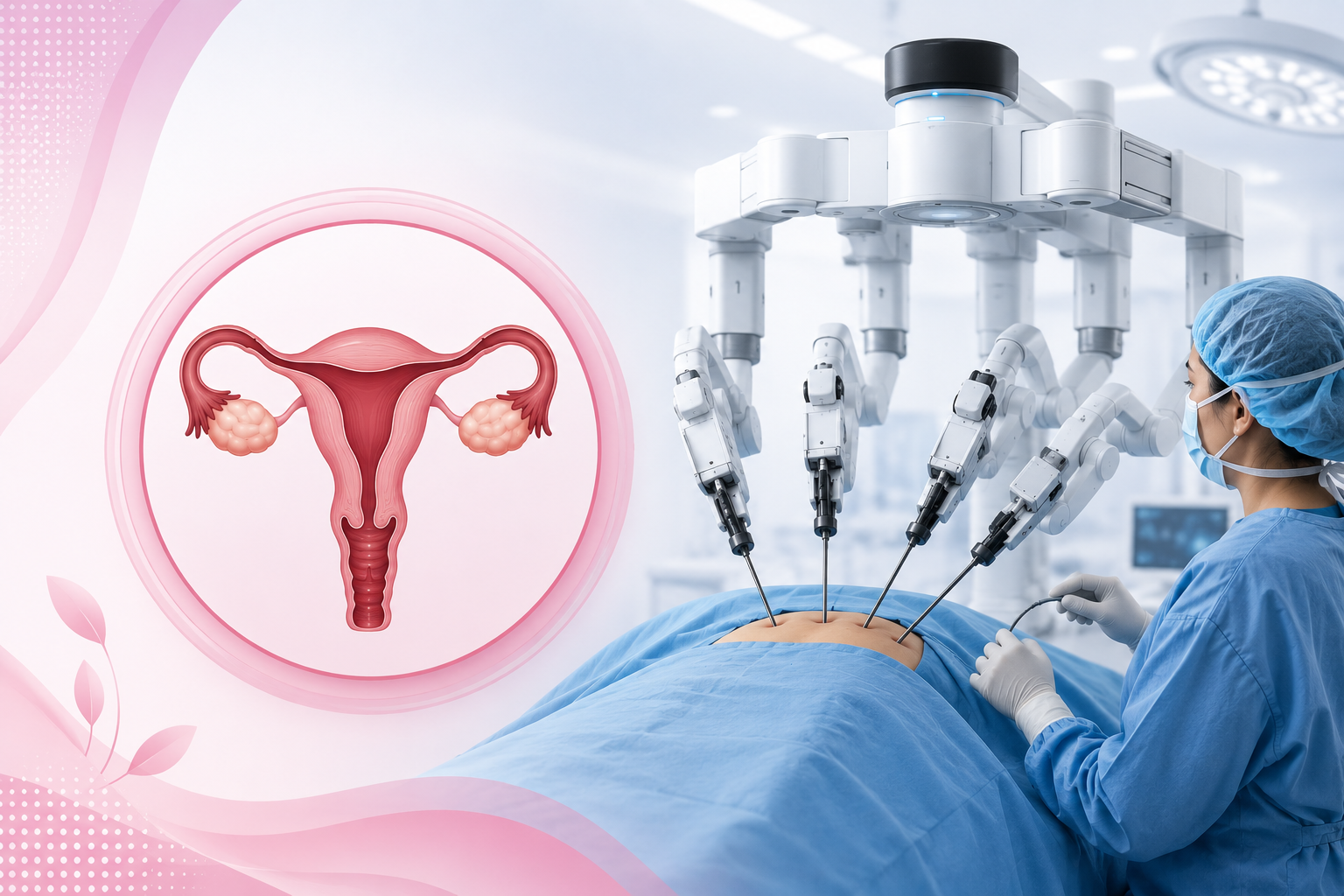
Robotic Hysterectomy in Faridabad — Recovery, Risks, and Why It Beats Open Surgery

Hysterectomy — the surgical removal of the uterus — is one of the most commonly performed major gynaecological surgeries in India. Yet many women still undergo open (abdominal) surgery, spending a week in hospital and months in recovery, when a robotic or laparoscopic approach could achieve the same result with a fraction of the pain, blood loss, and downtime. Dr. Shweta Mendiratta, robotic and laparoscopic surgeon in Faridabad, explains why the approach to your hysterectomy matters as much as the decision to have one.

When Is a Hysterectomy Necessary?

A hysterectomy may be recommended for:

  • Uterine fibroids causing severe symptoms unresponsive to other treatments
  • Adenomyosis with severe pain or bleeding when family is complete
  • Endometriosis with significant uterine involvement
  • Endometrial cancer or precancerous changes (hyperplasia with atypia)
  • Uterine prolapse
  • Chronic pelvic pain unresponsive to other treatments
  • Persistent abnormal uterine bleeding when other options have failed

Types of Hysterectomy by Surgical Approach

Open (Abdominal) Hysterectomy

The traditional approach involves a 10–15 cm horizontal incision across the lower abdomen. While it allows excellent access, it comes with significant drawbacks: 3–7 days in hospital, 6–8 weeks of recovery, higher infection risk, and a prominent scar.

Vaginal Hysterectomy

The uterus is removed through the vagina with no external incisions. An excellent option for uterine prolapse and certain other indications, but limited by access to the upper pelvis.

Laparoscopic Hysterectomy

The surgery is performed through 3–4 small (5–10 mm) incisions using a camera and instruments. It offers significantly faster recovery than open surgery — typically 1–2 nights in hospital and 2–3 weeks to return to normal activity.

Robotic Hysterectomy

Robotic-assisted laparoscopic hysterectomy (RALH) uses the da Vinci or similar robotic system to provide the surgeon with a 3D high-definition view and instruments with greater range of motion than standard laparoscopy. This is particularly advantageous for complex cases — large uteri, extensive adhesions, previous pelvic surgery, or obesity — where standard laparoscopy may be difficult.

Robotic vs Laparoscopic vs Open: Key Differences

  • Hospital stay: Open: 5–7 days | Laparoscopic: 1–2 days | Robotic: 1–2 days
  • Recovery time: Open: 6–8 weeks | Laparoscopic: 2–3 weeks | Robotic: 2–3 weeks
  • Blood loss: Open: Highest | Laparoscopic: Lower | Robotic: Lowest
  • Scar size: Open: 10–15 cm | Laparoscopic: 3–4 small ports | Robotic: 3–4 small ports
  • Complication rates: Open: Higher | Laparoscopic: Lower | Robotic: Comparable or slightly lower for complex cases
  • Surgeon precision: Open: Good | Laparoscopic: Good | Robotic: Excellent, especially in restricted spaces

Which Approach Is Best for You?

The optimal surgical approach depends on the size and condition of your uterus, your BMI, your surgical history, the indication for surgery, and your surgeon’s expertise. Dr. Mendiratta will discuss all options and recommend the approach that offers the best balance of safety, efficacy, and recovery for your specific situation.

The most important factor in the success of any hysterectomy — open, laparoscopic, or robotic — is surgeon experience. Dr. Mendiratta has performed hundreds of minimal-access hysterectomies and brings the same precision and attention to each procedure.

Recovery After Robotic/Laparoscopic Hysterectomy

  • Day 1–2: In hospital; walking the day after surgery
  • Week 1–2: Resting at home; light activity permitted
  • Week 3–4: Returning to desk work and light household duties
  • Week 6: Most women have returned to full normal activity, including exercise
  • No vaginal intercourse for 6–8 weeks after any type of hysterectomy

Risks of Hysterectomy

All surgery carries risks. For robotic/laparoscopic hysterectomy, these include:

  • Bleeding (rare, occasionally requiring transfusion)
  • Infection (reduced compared to open surgery)
  • Injury to adjacent structures (ureter, bladder, bowel) — very rare in experienced hands
  • Anaesthetic complications
  • Deep vein thrombosis (prevented by early mobilisation and compression stockings)

Serious complications are uncommon when surgery is performed by an experienced minimal-access surgeon. Dr. Mendiratta will discuss all risks with you in detail at your pre-operative consultation.

Frequently Asked Questions (FAQs)

Q1. Will I go into menopause after hysterectomy?

Only if your ovaries are removed at the same time (bilateral oophorectomy). If your ovaries are preserved — which is the standard approach for benign conditions in younger women — you will not experience surgical menopause.

Q2. Can I have a robotic hysterectomy even if I am overweight?

Yes. Robotic surgery is often preferred for women with higher BMI because the robotic system provides better access and visualisation in a deeper pelvis. Discuss this with Dr. Mendiratta during your consultation.

Q3. How long does a robotic hysterectomy take?

Typically 1.5–3 hours depending on the complexity of the case.

Q4. Will my sex life change after hysterectomy?

Most women report no change or even improvement in their sex life after hysterectomy, particularly if the procedure relieved pain, bleeding, or pressure. Vaginal length is preserved in all standard hysterectomy techniques.

Q5. How do I know if I need a total vs subtotal hysterectomy?

A total hysterectomy removes the uterus and cervix. A subtotal (supracervical) hysterectomy removes the uterus but leaves the cervix. The decision depends on several factors including the indication for surgery. Dr. Mendiratta will explain which is most appropriate for you.


Get In Touch With Dr. Shweta Mendiratta

Phone: +91-8130048652 | +91-9999093503

Email: shwetasmendiratta@gmail.com

Yatharth Super Speciality Hospital

Plot No 9, Sector-20, Krishna Nagar, New Industrial Township, Faridabad, Haryana 121007

Phone: +91 8178-939442

Mediclub Gynae ‘N’ Neuro Clinic

Pilot No. 857 Sector 21 C, Faridabad Delhi, Haryana 121001
 

Advances in Minimally Invasive Gynecologic Surgery: What’s Next?

Over the past few decades, gynecologic surgery has undergone a remarkable transformation. Traditional open surgeries that required large incisions, longer hospital stays, and extended recovery periods are now increasingly being replaced by minimally invasive surgical techniques. These modern procedures allow surgeons to treat complex gynecological conditions with smaller incisions, greater precision, and faster patient recovery.

Minimally invasive gynecologic surgery includes techniques such as laparoscopy and robotic-assisted surgery, which have become the preferred approach for many procedures including hysterectomy, fibroid removal, ovarian cyst surgery, and treatment of endometriosis.

According to experts like Dr. Shweta Mendiratta, recognized as one of the best gynecologists in Faridabad, continuous innovations in surgical technology are further improving outcomes for women. From advanced robotic systems to artificial intelligence-assisted planning, the future of gynecologic surgery is evolving rapidly.

In this article, we explore the latest advances in minimally invasive gynecologic surgery, emerging technologies shaping the future, and how these developments benefit patients.

Understanding Minimally Invasive Gynecologic Surgery

Minimally invasive surgery (MIS) refers to surgical techniques that are performed through small incisions using specialized instruments and cameras rather than large cuts used in traditional open surgery.

Common minimally invasive approaches include:

  • Laparoscopic surgery
  • Robotic-assisted surgery
  • Hysteroscopic procedures

These techniques allow surgeons to operate with enhanced precision while minimizing trauma to surrounding tissues.

Why Minimally Invasive Surgery Is Transforming Women’s Healthcare

Minimally invasive surgery has become increasingly popular because it offers several advantages for patients:

  • Smaller incisions
  • Less post-operative pain
  • Reduced blood loss
  • Shorter hospital stays
  • Faster recovery
  • Minimal scarring

These benefits not only improve surgical outcomes but also enhance the overall patient experience.

Emerging Trends in Minimally Invasive Gynecologic Surgery

As technology continues to evolve, several new innovations are shaping the future of gynecologic surgery. These advancements are designed to improve surgical precision, reduce complications, and further enhance patient safety.

  1. Single-Incision Laparoscopic Surgery (SILS)

One of the latest innovations in minimally invasive surgery is Single-Incision Laparoscopic Surgery (SILS).

Unlike conventional laparoscopy, which requires multiple small incisions, SILS involves performing the entire surgery through a single small incision, usually near the belly button.

Advantages of SILS

  • Minimal visible scarring
  • Reduced post-operative pain
  • Faster healing
  • Improved cosmetic outcomes

Although SILS requires specialized training and equipment, it is becoming increasingly popular for procedures such as hysterectomy and ovarian cyst removal.

  1. Augmented Reality in Surgical Planning

Another exciting advancement in surgical technology is the use of augmented reality (AR) in surgical planning.

Augmented reality allows surgeons to combine 3D imaging from CT scans or MRIs with real-time surgical views, providing a more detailed understanding of the patient’s anatomy.

Benefits of Augmented Reality

  • Better surgical planning
  • Improved visualization of organs and blood vessels
  • Greater surgical accuracy
  • Reduced risk of complications

AR technology helps surgeons navigate complex cases with greater confidence and precision.

  1. AI-Assisted Robotic Surgery

Artificial Intelligence (AI) is beginning to play an important role in surgical innovation. In robotic-assisted procedures, AI-powered systems can assist surgeons by analyzing data and providing insights during surgery.

How AI Supports Robotic Surgery

  • Predicting potential complications
  • Assisting in surgical decision-making
  • Enhancing robotic instrument precision
  • Providing real-time feedback

Although AI does not replace surgeons, it serves as an intelligent support system that helps improve surgical outcomes.

  1. Improved Suturing Tools and Energy Devices

Technological advancements are also improving the tools surgeons use during procedures.

Modern energy devices and suturing instruments allow surgeons to perform delicate tasks more efficiently.

Examples of Advanced Surgical Tools

  • Advanced bipolar energy devices for precise tissue sealing
  • Ultrasonic surgical instruments
  • Improved laparoscopic suturing devices
  • Advanced robotic instruments with enhanced flexibility

These innovations help reduce surgical time, minimize bleeding, and improve patient recovery.

How These Advances Benefit Patients

Technological innovations in gynecologic surgery are not just about improving surgical techniques — they are also about improving the overall patient experience.

Faster Recovery

Modern minimally invasive procedures cause less tissue damage, allowing patients to recover faster and return to daily activities sooner.

Reduced Surgical Complications

Advanced imaging and robotic systems help surgeons operate with greater accuracy, reducing the likelihood of complications.

Greater Precision

Robotic and AI-assisted technologies enable surgeons to perform extremely delicate procedures with enhanced control.

Improved Patient Comfort

Smaller incisions and less trauma to surrounding tissues lead to reduced pain and minimal scarring.

These benefits are transforming the way gynecological conditions are treated.

Conditions Treated Using Advanced Minimally Invasive Surgery

Minimally invasive techniques can be used to treat a wide range of gynecologic conditions, including:

  • Uterine fibroids
  • Endometriosis
  • Ovarian cysts
  • Adenomyosis
  • Pelvic organ prolapse
  • Chronic pelvic pain
  • Infertility-related conditions
  • Gynecologic cancers (early stage)

Many of these procedures can now be performed with robotic or laparoscopic techniques, allowing for better surgical outcomes.

The Importance of Surgical Expertise

While modern technology plays a crucial role in advancing surgical care, the expertise of the surgeon remains the most important factor in achieving successful outcomes.

Experienced specialists such as Dr. Shweta Mendiratta, widely regarded as one of the best gynecologists in Faridabad, combine advanced surgical technology with years of clinical expertise to provide safe, effective, and personalized treatment for women.

Choosing an experienced surgeon ensures that patients benefit fully from the latest advancements in minimally invasive gynecologic surgery.

The Future of Gynecologic Surgery

The field of gynecologic surgery continues to evolve rapidly, and several exciting innovations are expected in the coming years.

Future developments may include:

  • Fully integrated AI-assisted robotic platforms
  • Enhanced surgical simulation and training tools
  • Personalized surgical planning using genetic and imaging data
  • Advanced micro-robotic surgical instruments

These technologies aim to make surgeries even safer, more precise, and more patient-friendly.

Conclusion

Minimally invasive gynecologic surgery has revolutionized women’s healthcare by providing safer alternatives to traditional open surgery. With smaller incisions, faster recovery, and reduced complications, these techniques have become the preferred approach for treating many gynecological conditions.

The future of gynecologic surgery is even more promising. Emerging technologies such as single-incision laparoscopic surgery, augmented reality, AI-assisted robotic systems, and advanced surgical instruments are shaping the next generation of surgical care.

As innovation continues to advance, patients can expect smarter, safer, and more personalized treatment options.

With the guidance of experienced specialists like Dr. Shweta Mendiratta, women can benefit from these modern surgical techniques and achieve better health outcomes with minimal disruption to their daily lives.

FAQs

  1. What is minimally invasive gynecologic surgery?

Minimally invasive surgery involves performing procedures through small incisions using specialized instruments and cameras. It reduces pain, scarring, and recovery time compared to traditional open surgery.

  1. Is robotic surgery safer than traditional surgery?

Robotic surgery offers improved precision, better visualization, and smaller incisions, which often result in fewer complications and faster recovery when performed by an experienced surgeon.

  1. How long does recovery take after minimally invasive surgery?

Most patients recover within 1–3 weeks, depending on the procedure and their overall health condition.

  1. Are these surgeries painful?

Because minimally invasive surgeries use small incisions, patients generally experience less pain compared to open surgery. Pain can usually be managed with medication.

  1. Who is a good candidate for minimally invasive gynecologic surgery?

Many women with conditions such as fibroids, ovarian cysts, endometriosis, or pelvic pain may be candidates. A consultation with a specialist will determine the most appropriate treatment.