

Perimenopause at 40 — Signs Most Indian Doctors Miss and What to Do

Most women expect menopause to arrive somewhere in their early to mid-fifties. So when changes begin in their late thirties or early forties — irregular periods, sleepless nights, inexplicable mood swings, brain fog — they rarely connect them to hormonal transition. Neither, unfortunately, do many doctors, who dismiss these symptoms as stress, anxiety, or thyroid problems without considering the most likely culprit: perimenopause. Dr. Shweta Mendiratta, menopause specialist in Faridabad, explains what perimenopause is, why it is so often missed, and what women can do about it.

What Is Perimenopause?

Perimenopause is the transitional phase leading up to menopause — the permanent cessation of menstruation. It typically begins 4–8 years before the last menstrual period. For most women, this means perimenopause starts between ages 40 and 51, though it can begin as early as the late thirties.

Menopause itself is defined as 12 consecutive months without a period. Perimenopause is everything before that point. During this phase, the ovaries gradually produce less oestrogen and progesterone, and ovulation becomes irregular.

Why Perimenopause Is Missed in India

Several factors contribute to the underdiagnosis of perimenopause in Indian women:

  • Cultural normalisation of suffering: Mood changes, fatigue, and physical discomfort are often attributed to work stress, family responsibilities, or simply ‘getting older.’
  • Lack of awareness: Perimenopause is rarely discussed openly in Indian families or medical consultations.
  • Symptom overlap: Perimenopause symptoms mimic thyroid disease, depression, anxiety, anaemia, and other common conditions.
  • Diagnostic bias: Doctors often treat the individual symptoms (sleeping tablets for insomnia, antidepressants for mood changes) without considering the underlying hormonal cause.

Symptoms of Perimenopause — The Complete Picture

Menstrual Changes

  • Irregular periods — cycles becoming shorter (less than 21 days) or longer (more than 35 days)
  • Heavier or lighter than usual periods
  • Missed periods — often mistaken for pregnancy
  • Intermenstrual spotting

Vasomotor Symptoms

  • Hot flushes: Sudden waves of heat, typically in the face, neck, and chest, often accompanied by sweating
  • Night sweats: Drenching sweats during sleep, leading to disturbed sleep and chronic fatigue

Sleep Disturbances

Many perimenopausal women develop insomnia — difficulty falling asleep, frequent waking, or early morning waking — that has no other apparent cause. This is directly linked to falling oestrogen and progesterone levels.

Mood and Cognitive Changes

  • Increased anxiety, irritability, or emotional lability
  • Low mood or mild depression
  • Brain fog: Difficulty concentrating, poor short-term memory, word-finding difficulties

These symptoms are frequently misattributed to clinical depression or anxiety disorder and treated with antidepressants or anxiolytics when hormone therapy would be more appropriate.

Physical Symptoms

  • Vaginal dryness and reduced lubrication (genitourinary syndrome of menopause)
  • Reduced libido
  • Joint and muscle aches
  • Headaches
  • Changes in skin (increased dryness, loss of elasticity)
  • Weight gain, particularly around the abdomen

How Is Perimenopause Diagnosed?

Perimenopause is primarily a clinical diagnosis based on age, symptoms, and menstrual history. Blood tests can be supportive but are not always definitive, particularly in early perimenopause when hormone levels fluctuate widely:

  • FSH: Rising FSH (above 10 IU/L, particularly above 25 IU/L) suggests reduced ovarian reserve
  • Oestradiol: Fluctuating, often lower than expected
  • AMH: Declining; a very low AMH in a symptomatic woman in her 40s is consistent with perimenopause
  • Thyroid function: Essential to rule out as a contributing factor
  • Full blood count: To exclude anaemia as a cause of fatigue

What Women Can Do

Lifestyle Measures

  • Regular strength training and weight-bearing exercise (to protect bone density and muscle mass)
  • Aerobic exercise (to improve cardiovascular health and mood)
  • Reducing alcohol and caffeine (which worsen hot flushes and sleep disruption)
  • Adequate calcium and vitamin D intake
  • Stress management through yoga, mindfulness, or counselling

Hormone Replacement Therapy (HRT)

For women with significant perimenopausal symptoms, HRT is the most effective treatment. Modern HRT — using body-identical hormones at the lowest effective dose — is safe for most women under 60 who begin it within 10 years of menopause. Dr. Mendiratta provides individualised HRT assessment and prescribing, including discussion of risks and benefits in the context of your personal health history.

Non-Hormonal Options

For women who cannot or prefer not to use HRT, several non-hormonal options help manage specific symptoms:

  • SSRIs/SNRIs: For hot flushes and mood symptoms
  • Clonidine: For hot flushes
  • Cognitive behavioural therapy (CBT): Highly effective for mood and sleep disturbances
  • Vaginal oestrogen: Safe even for women who cannot use systemic HRT; treats genitourinary symptoms locally

Frequently Asked Questions (FAQs)

Q1. Can I get pregnant during perimenopause?

Yes. Ovulation still occurs intermittently during perimenopause, and pregnancy is possible. Contraception should be continued until you have had 12 consecutive months without a period (i.e., confirmed menopause) or until age 55.

Q2. What is the difference between perimenopause and premature ovarian insufficiency (POI)?

POI (previously called premature menopause) occurs before age 40. Perimenopause is a natural transition that begins in the 40s. Both are characterised by declining ovarian function, but POI is less expected and has different implications for fertility and bone health.

Q3. How long does perimenopause last?

On average, 4–8 years, but it can be shorter or longer. Symptoms may be most intense in the 1–2 years just before the last period.

Q4. Is it normal to have periods every 2 weeks during perimenopause?

Irregular cycles, including short cycles, are common in perimenopause. However, very frequent or heavy bleeding should be evaluated to rule out fibroids, polyps, or endometrial abnormalities.

Q5. Does perimenopause affect bone health?

Yes. The decline in oestrogen during perimenopause accelerates bone loss. This is a key reason why calcium, vitamin D, weight-bearing exercise, and HRT (when appropriate) are important during this phase.


Get In Touch With Dr. Shweta Mendiratta

Phone: +91-8130048652 | +91-9999093503

Email: shwetasmendiratta@gmail.com

Yatharth Super Speciality Hospital

Plot No 9, Sector-20, Krishna Nagar, New Industrial Township, Faridabad, Haryana 121007

Phone: +91 8178-939442

Mediclub Gynae ‘N’ Neuro Clinic

Plot No. 857 Sector 21 C, Faridabad Delhi, Haryana 121001
Ovarian Cystectomy — When to Watch and When to Operate, Explained by Dr. Shweta Mendiratta

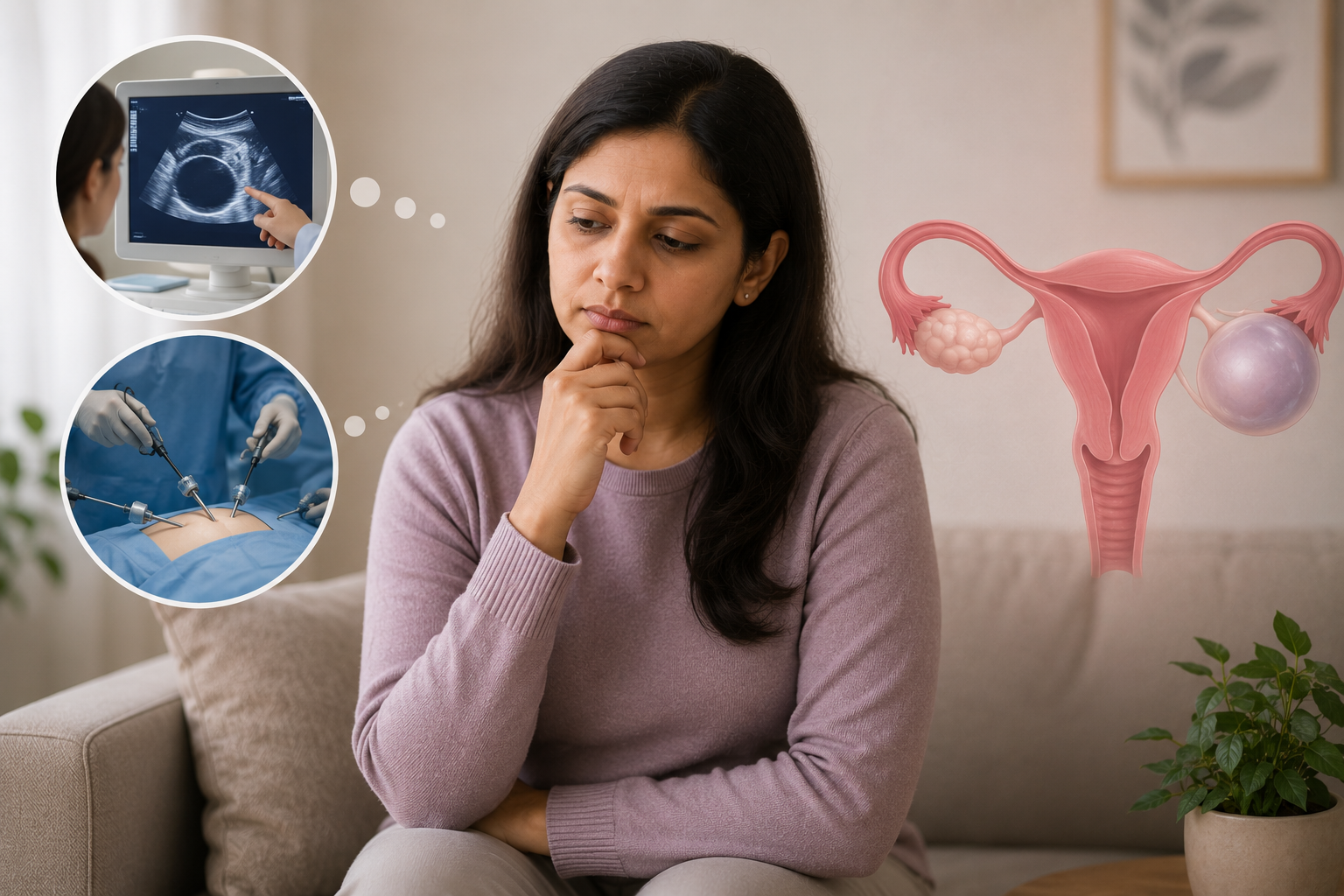
An ovarian cyst diagnosis can be alarming — but in most cases, the cyst is benign, causes no symptoms, and resolves on its own. The challenge is identifying which cysts require surveillance only, which need medical management, and which genuinely need surgical removal. Dr. Shweta Mendiratta, laparoscopic and robotic gynaecological surgeon in Faridabad, guides you through the decision-making process.

What Are Ovarian Cysts?

An ovarian cyst is a fluid-filled sac that develops on or within an ovary. They are extraordinarily common — most women will have at least one ovarian cyst during their lifetime, often without knowing it.

There are several types of ovarian cysts:

  • Functional cysts: Follicular cysts (from an egg-containing follicle that doesn’t rupture) and corpus luteum cysts (from the structure left after ovulation). These are by far the most common and almost always resolve within 1–3 menstrual cycles without treatment.
  • Endometriomas (chocolate cysts): Cysts caused by endometriosis, filled with old blood. These do not resolve spontaneously and can impair ovarian reserve.
  • Dermoid cysts (mature teratomas): Contain a variety of tissue types (skin, hair, teeth). Generally benign but require surgical removal due to the risk of complications.
  • Cystadenomas: Serous or mucinous cysts arising from the ovarian surface. Can grow large; require surgical removal.
  • Polycystic ovaries: Multiple small follicles in PCOS — not ‘cysts’ in the traditional sense.

When to Watch and Wait

Not all ovarian cysts require surgery. Expectant management (watching and waiting) is appropriate when:

  • The cyst is less than 5 cm in a premenopausal woman
  • The ultrasound features are reassuringly simple (thin-walled, no solid components, no septae, no blood flow within the cyst)
  • The woman is asymptomatic
  • Tumour markers (CA-125, AFP, inhibin) are normal
  • The cyst is consistent with a functional cyst

In these cases, Dr. Mendiratta typically recommends a repeat ultrasound after 6–12 weeks to confirm resolution.

When Surgery Is Required

Surgical removal (ovarian cystectomy) is recommended when:

  • The cyst is large (generally over 5–6 cm and not decreasing in size)
  • Ultrasound features are suspicious: thick walls, internal septations, solid components, papillary projections, or abnormal blood flow
  • CA-125 or other tumour markers are elevated
  • The cyst persists beyond 3 menstrual cycles
  • The cyst is causing significant pain, pressure, or other symptoms
  • Torsion (twisting of the ovary) is suspected — a gynaecological emergency
  • The cyst has ruptured and is causing internal bleeding
  • The woman is postmenopausal (any new cyst requires careful evaluation)
  • The cyst is an endometrioma (particularly if affecting fertility or growing)
  • The cyst is a dermoid or cystadenoma (which do not resolve spontaneously)

Ovarian Cystectomy: The Surgical Procedure

Ovarian cystectomy — removal of the cyst while preserving the ovary — is the preferred approach for most benign cysts in women of reproductive age. Dr. Mendiratta performs this laparoscopically or robotically:

  • 3–4 small port incisions (5–10 mm)
  • The cyst wall is carefully dissected from the ovarian tissue and removed intact
  • Ovarian tissue is meticulously preserved
  • The ovary is repaired (no sutures needed in small defects; careful suturing for larger ones)

Preservation of healthy ovarian tissue is critically important, particularly for women who wish to conceive. Dr. Mendiratta uses technique specifically designed to minimise damage to the surrounding follicles.

Endometrioma Surgery — Special Considerations

Ovarian endometriomas (chocolate cysts) require particularly careful surgical technique because the cyst wall is adherent to normal ovarian cortex and indiscriminate removal damages the healthy tissue beneath. Evidence suggests that stripping endometriomas significantly reduces ovarian reserve (AMH levels). Dr. Mendiratta uses a conservative, minimal-damage technique and discusses the risks and benefits of surgery versus expectant management thoroughly with patients planning IVF.

Frequently Asked Questions (FAQs)

Q1. Can ovarian cysts cause infertility?

Functional cysts do not cause infertility and resolve on their own. Endometriomas and large cysts that damage ovarian tissue can impair fertility. The decision to operate should carefully weigh the potential damage from surgery against the damage from leaving the cyst in place.

Q2. Is ovarian cyst surgery safe?

Laparoscopic ovarian cystectomy is a safe, well-established procedure. As with all surgery, there are small risks of bleeding, infection, and injury to adjacent structures, which are minimised by the experience of the surgeon.

Q3. How quickly do ovarian cysts regrow after surgery?

Simple functional cysts do not recur. Endometriomas have a recurrence rate of approximately 20–30% over 5 years. Medical treatment (OCPs, dienogest) after surgery reduces recurrence risk.

Q4. Can an ovarian cyst be cancerous?

The vast majority of ovarian cysts in women under 50 are benign. However, certain ultrasound features (solid components, internal blood flow, papillary projections) and elevated tumour markers raise the suspicion of malignancy and require urgent specialist evaluation.

Q5. My doctor said my cyst is 4 cm — should I be worried?

A 4 cm cyst in a premenopausal woman with benign ultrasound features is unlikely to be serious. A repeat scan in 6–8 weeks is typically advised. If it persists or grows, further evaluation is warranted.


Get In Touch With Dr. Shweta Mendiratta

Phone: +91-8130048652 | +91-9999093503

Email: shwetasmendiratta@gmail.com

Yatharth Super Speciality Hospital

Plot No 9, Sector-20, Krishna Nagar, New Industrial Township, Faridabad, Haryana 121007

Phone: +91 8178-939442

Mediclub Gynae ‘N’ Neuro Clinic

Plot No. 857 Sector 21 C, Faridabad Delhi, Haryana 121001
What Is Robotic Gynecologic Surgery? A Simple Patient Guide

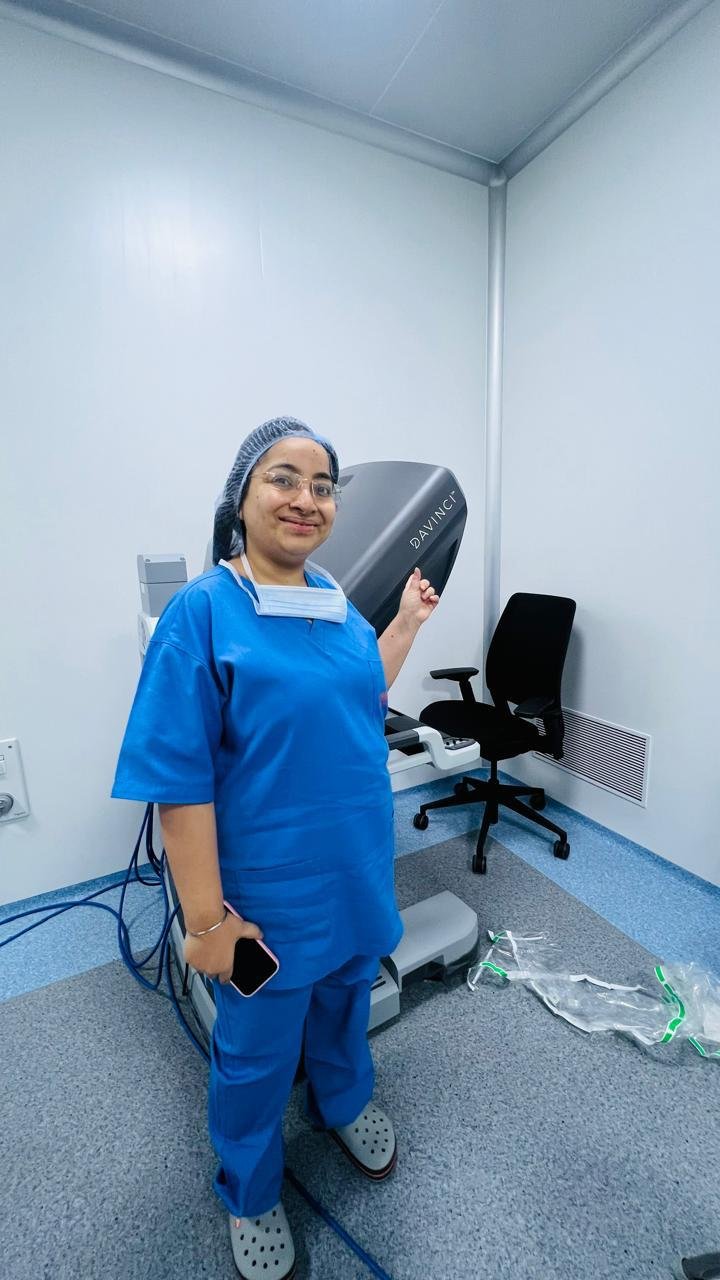
Advancements in medical technology have significantly improved the way many surgeries are performed today. One of the most remarkable innovations in women’s health care is robotic gynecologic surgery. This modern surgical approach allows doctors to perform complex procedures with greater precision while ensuring faster recovery and minimal discomfort for patients. Specialists like Dr. Shweta Mendiratta, widely recognized as Dr Shweta Mendiratta – Best Gynae Robotic Surgeon Doctor in Faridabad, use this advanced technology to treat a wide range of gynecological conditions with improved accuracy and patient safety.

In this guide, we will explain what robotic gynecologic surgery is, how it works, its benefits, and the common procedures performed using this advanced technology.

What Is Robotic Gynecologic Surgery?

Robotic gynecologic surgery is a minimally invasive surgical technique where a surgeon uses a robotic system to perform gynecological procedures with extreme accuracy.

Despite the name, the robot does not perform the surgery independently. The surgeon controls the robotic instruments from a specialized console. The robotic system translates the surgeon’s hand movements into highly precise actions inside the patient’s body.

This technology allows surgeons to perform delicate procedures through very small incisions, reducing trauma to surrounding tissues.

Advanced specialists such as Dr Shweta Mendiratta – Best Gynae Robotic Surgeon Doctor in Faridabad use robotic-assisted techniques to provide safer and more effective surgical outcomes for women.

How Does Robotic Surgery Work?

In robotic surgery, the surgeon sits at a console near the patient and controls robotic arms equipped with tiny surgical instruments.

A high-definition camera provides a magnified 3D view of the surgical area, allowing the surgeon to see anatomical structures more clearly than in traditional surgery.

The robotic system also filters out hand tremors and allows for more flexible movements than the human wrist. This helps surgeons perform delicate procedures with exceptional precision and control.

Key Features of Robotic Gynecologic Surgery

Robotic-assisted surgery offers several advanced features that make it a preferred option for many gynecological procedures.

1. Enhanced 3D Visualization

The robotic system provides surgeons with a high-definition, three-dimensional view of the surgical area. This improved visualization allows doctors to identify tissues, nerves, and blood vessels more clearly, reducing the risk of complications.

2. Small Incisions

Unlike traditional open surgery that requires large cuts, robotic surgery uses tiny incisions through which specialized instruments and a camera are inserted.

3. Greater Precision and Range of Motion

Robotic instruments have a greater range of motion than the human hand, allowing surgeons to perform extremely delicate procedures in confined spaces.

4. Improved Surgical Control

The surgeon remains in complete control of the robotic system throughout the procedure, ensuring maximum safety and accuracy.

Common Procedures Performed with Robotic Gynecologic Surgery

Robotic technology is widely used for several gynecological procedures that require high precision.

Hysterectomy

A hysterectomy is the surgical removal of the uterus and is commonly recommended for conditions such as fibroids, heavy bleeding, or uterine cancer.

Robotic hysterectomy allows the procedure to be performed with minimal incisions and faster recovery compared to traditional surgery.

Myomectomy

A myomectomy is performed to remove uterine fibroids while preserving the uterus. Robotic surgery enables surgeons to remove fibroids with precision, which is especially important for women who wish to maintain fertility.

Endometriosis Surgery

Endometriosis is a condition where tissue similar to the uterine lining grows outside the uterus, causing severe pain and fertility issues.

Robotic surgery helps surgeons carefully remove endometriosis tissue while protecting surrounding organs.

Ovarian Cystectomy

An ovarian cystectomy involves removing cysts from the ovaries while preserving healthy ovarian tissue. Robotic assistance allows for precise removal with minimal damage to surrounding tissues.

Benefits of Robotic Gynecologic Surgery for Patients

One of the biggest advantages of robotic surgery is the improved patient experience and faster recovery.

Less Pain

Because robotic surgery involves smaller incisions, patients usually experience less post-operative pain compared to traditional open surgery.

Shorter Hospital Stay

Many patients can go home within 24 hours or even the same day after robotic surgery.

Faster Recovery

Smaller incisions and minimal tissue damage help patients recover faster and return to normal activities sooner.

Reduced Blood Loss

Robotic precision often results in less bleeding during surgery, reducing the need for blood transfusions.

Smaller Scars

Tiny incisions lead to minimal scarring, which is an important cosmetic benefit for many patients.

These benefits make robotic surgery a preferred choice for many patients treated by Dr Shweta Mendiratta – Best Gynae Robotic Surgeon Doctor in Faridabad, who focuses on providing advanced and patient-friendly surgical care.

Who Is a Good Candidate for Robotic Gynecologic Surgery?

Robotic surgery may be recommended for women who require treatment for conditions such as:

  • Uterine fibroids

  • Endometriosis

  • Ovarian cysts

  • Heavy menstrual bleeding

  • Uterine abnormalities

  • Certain gynecological cancers

However, the suitability of robotic surgery depends on several factors including the patient’s medical history, the severity of the condition, and the type of procedure required. Consulting an experienced specialist such as Dr Shweta Mendiratta – Best Gynae Robotic Surgeon Doctor in Faridabad can help determine the most appropriate treatment plan.

What to Expect Before and After Surgery
Before Surgery

Your doctor may recommend:

  • Blood tests and imaging tests

  • A detailed medical evaluation

  • Instructions regarding fasting before surgery

The surgeon will also explain the procedure, potential risks, and expected outcomes.

After Surgery

Most patients experience a smooth and relatively quick recovery. Mild discomfort, fatigue, or swelling around the incision sites may occur for a few days.

Patients are usually advised to:

  • Avoid heavy lifting for a few weeks

  • Follow the prescribed medications

  • Attend follow-up appointments

  • Gradually return to daily activities

Why Choosing an Experienced Surgeon Matters

Robotic surgery requires specialized training and expertise. Choosing a qualified and experienced surgeon ensures that patients receive the safest and most effective care.

Doctors with extensive experience in robotic gynecologic procedures can provide personalized treatment plans and better surgical outcomes.

Experts like Dr Shweta Mendiratta – Best Gynae Robotic Surgeon Doctor in Faridabad combine surgical expertise with advanced robotic technology to deliver safe and effective treatments for women.

Conclusion

Robotic gynecologic surgery represents a major advancement in women’s healthcare. By combining cutting-edge technology with surgical expertise, it offers safer procedures, minimal discomfort, and quicker recovery for many gynecological conditions.

For women who require surgical treatment, robotic surgery can provide a patient-friendly and highly effective solution. Under the care of experienced specialists such as Dr Shweta Mendiratta – Best Gynae Robotic Surgeon Doctor in Faridabad, patients can benefit from advanced surgical care and improved treatment outcomes.

FAQs
1. Is robotic gynecologic surgery safe?

Yes, robotic surgery is considered safe when performed by a trained and experienced surgeon. It offers improved precision and better visualization during the procedure.

2. How long does recovery take after robotic surgery?

Most patients recover faster than traditional surgery. Many can resume normal activities within 2–3 weeks, depending on the procedure.

3. Will there be visible scars after robotic surgery?

Robotic surgery uses very small incisions, so scarring is minimal compared to open surgery.

4. Is robotic surgery painful?

Patients typically experience less pain than traditional surgery because of the smaller incisions and minimal tissue damage.

5. Is robotic surgery suitable for all gynecological conditions?

Not all cases require robotic surgery. Your doctor will evaluate your condition and recommend the most appropriate treatment option.