

Gynecologist Near Sector 43, Faridabad – Dr. Shweta Mendiratta

Women’s healthcare needs change at every stage of life—from menstrual and hormonal concerns to pregnancy, fertility, gynecological conditions and menopause. For women living in and around Sector 43, Faridabad, having access to an experienced gynecologist can make it easier to address concerns early and receive appropriate medical guidance.

If you are searching for a gynecologist near Sector 43, Faridabad, Dr. Shweta Mendiratta offers comprehensive obstetrics and gynecology care in Faridabad. She is Director & Head – Unit II, Obstetrics & Gynecology at Yatharth Hospital, Sector 20, and has more than 15 years of experience in women’s healthcare. Her areas of expertise include gynecology, obstetrics, laparoscopic and robotic gynecological surgery, infertility care, high-risk pregnancy and menopause care.

Why Women in Sector 43 May Need a Gynecologist

Gynecological care is not limited to pregnancy. Women may need professional medical advice for symptoms that affect their periods, hormones, reproductive health, fertility or overall wellbeing.

A consultation may be appropriate if you experience:

  • Irregular or missed periods
  • Very heavy or painful periods
  • Persistent pelvic pain
  • Unusual vaginal discharge or recurrent infections
  • Symptoms associated with PCOS
  • Difficulty conceiving
  • Fibroids or ovarian cysts
  • Pregnancy-related concerns
  • Recurrent pregnancy complications
  • Menopausal or perimenopausal symptoms
  • Concerns about contraception or reproductive health

Some symptoms may have several possible causes, so self-diagnosis based only on internet searches is not always appropriate. A gynecologist can review your medical history, symptoms and examination findings and recommend investigations when necessary.

When Should You See a Gynecologist Near Sector 43?

You do not always need to wait until a symptom becomes severe before seeking medical advice.

Irregular periods

Occasional changes in the menstrual cycle can happen for different reasons, but persistent irregular periods deserve evaluation. PCOS, thyroid disorders, hormonal changes, stress and other conditions can affect menstrual patterns.

Dr. Shweta Mendiratta’s recent guide on PCOS and irregular periods explains why tracking your cycles and associated symptoms can be useful before a consultation.

Read: PCOS and Irregular Periods – When Should You See a Gynecologist?

Painful or unusually heavy periods

Severe menstrual pain or very heavy bleeding should not simply be accepted as something every woman has to tolerate. Conditions such as fibroids, endometriosis, adenomyosis and hormonal disorders may sometimes contribute to menstrual problems.

A gynecological evaluation can help determine whether further assessment is required.

Pelvic pain or abnormal discharge

Persistent pelvic discomfort, pain during intercourse, unusual discharge, itching or recurrent infections may require professional evaluation. The appropriate treatment depends on the underlying cause.

Changes during perimenopause and menopause

Women in their 40s and 50s may experience changes in periods, hot flashes, sleep problems, mood changes or vaginal symptoms. Dr. Shweta Mendiratta also has a Certified Menopause Practitioner (CIMP) credential and provides menopause-related care.

Gynecological Care for Women in Sector 43, Faridabad

A gynecologist can provide care for a broad range of women’s health concerns.

Dr. Shweta Mendiratta’s practice covers areas including routine gynecological consultations, menstrual disorders, PCOS, infertility evaluation, pregnancy care and gynecological surgery. Her official profile also lists laparoscopic and robotic gynecological surgery among her areas of expertise.

PCOS and hormonal concerns

Polycystic ovary syndrome can affect menstrual regularity, ovulation, skin and hair changes and fertility. However, irregular periods alone do not necessarily mean that a woman has PCOS.

A proper evaluation can help distinguish PCOS from other possible hormonal or medical causes.

Fibroids and ovarian cysts

Fibroids are non-cancerous growths that can develop in or around the uterus. Depending on their size and location, they may be associated with heavy periods, pelvic pressure, pain or fertility concerns.

Ovarian cysts can also occur for different reasons and may or may not require treatment. Management depends on factors such as symptoms, cyst characteristics and the individual’s overall clinical picture.

For women concerned about pregnancy and fibroids, Dr. Shweta Mendiratta has also discussed how fibroids may affect pregnancy and why individual assessment is important.

Read: Can You Get Pregnant With Fibroids? Risks & Solutions

Pregnancy Care Near Sector 43, Faridabad

Pregnancy involves regular monitoring throughout different stages. Choosing a gynecologist early can help establish a structured antenatal care plan and provide an opportunity to discuss existing health conditions, previous pregnancy history and pregnancy-related concerns.

Dr. Shweta Mendiratta provides obstetric care including antenatal monitoring, pregnancy management and care for pregnancies requiring closer supervision. Her official profile identifies high-risk pregnancy management as one of her areas of specialization.

Women planning pregnancy may also benefit from a preconception consultation. This can provide an opportunity to discuss medical history, medications, lifestyle factors, previous pregnancy complications and fertility-related concerns before conception.

Read: Top Questions to Ask Your Gynecologist Before Planning Pregnancy

High-Risk Pregnancy Management

Not every pregnancy carries the same level of risk.

A pregnancy may require closer monitoring because of factors such as:

  • Previous pregnancy complications
  • Previous cesarean delivery
  • Multiple pregnancy
  • Diabetes
  • High blood pressure
  • Thyroid or other medical conditions
  • Pregnancy-related complications
  • Maternal age and other individual risk factors

Being classified as high-risk does not automatically mean that complications will occur. It means that additional monitoring and medical supervision may be appropriate.

Dr. Shweta Mendiratta provides high-risk pregnancy management, including assessment, antenatal monitoring and individualized care planning.

Read: High-Risk Pregnancy Management by Dr. Shweta Mendiratta

Infertility and Fertility Evaluation

Difficulty conceiving can have multiple causes, and infertility is not exclusively a woman’s issue. Factors affecting ovulation, fallopian tubes, the uterus, endometriosis, hormonal conditions and male reproductive health can all be relevant.

A fertility consultation can help identify what evaluation may be appropriate rather than immediately assuming that one particular treatment is required.

Dr. Shweta Mendiratta provides infertility evaluation and treatment and has discussed causes including ovulation disorders, PCOS, thyroid-related issues, blocked tubes, endometriosis and uterine abnormalities.

Read: Infertility – Causes, Diagnosis and Modern Treatments

Minimally Invasive Gynecological Surgery

Some gynecological conditions may require surgical treatment. Depending on the diagnosis, laparoscopic or hysteroscopic techniques may be considered.

Minimally invasive approaches can be used for selected conditions such as fibroids, ovarian cysts, endometriosis and certain fertility-related problems. Whether surgery is appropriate depends on the individual’s symptoms, diagnosis, medical history and treatment goals.

Dr. Shweta Mendiratta’s official profile identifies her as a Robotic & Laparoscopic Surgeon and lists minimally invasive gynecological procedures among her expertise.

Why Consider Dr. Shweta Mendiratta?

Women searching for a gynecologist near Sector 43 may consider several factors before choosing a doctor.

Dr. Shweta Mendiratta offers:

  • More than 15 years of experience in Obstetrics & Gynecology
  • MBBS and MS in Obstetrics & Gynecology
  • DNB in Obstetrics & Gynecology
  • FICOG qualification
  • Certified Menopause Practitioner (CIMP) credential
  • Expertise in gynecology and obstetrics
  • Laparoscopic and robotic gynecological surgery experience
  • Infertility evaluation and management
  • High-risk pregnancy care
  • Menopause care
  • A patient-focused approach to women’s healthcare

Her official website identifies her as Director & Head – Unit II, Obstetrics & Gynecology at Yatharth Hospital, Sector 20, Faridabad.

Learn More About Dr. Shweta Mendiratta

Where Can Women From Sector 43 Consult Dr. Shweta Mendiratta?

Although women may search for a gynecologist in Sector 43, Faridabad, Dr. Shweta Mendiratta’s official website currently lists two consultation locations:

Yatharth Super Speciality Hospital, Sector 20, Faridabad

Address: Plot No. 9, Sector-20, Krishna Nagar, New Industrial Township, Faridabad, Haryana 121007.

Monday to Saturday, 10:00 AM to 4:00 PM, with Sunday closed.

Dr. Shweta Mendiratta – Yatharth Super Speciality Hospital

Mediclub Gynae ‘N’ Neuro Clinic, Sector 21C, Faridabad

Address: Pilot No. 857, Sector 21C, Faridabad, Haryana 121001.

The official website lists consultation hours of 5:30 PM to 7:30 PM, with Thursday and Sunday closed.

Dr. Shweta Mendiratta – Mediclub Gynae ‘N’ Neuro Clinic

Because clinic timings can change, it is advisable to confirm the appointment schedule before visiting.

Contact & Appointment Details

Frequently Asked Questions

1. Is Dr. Shweta Mendiratta a gynecologist near Sector 43, Faridabad?

Dr. Shweta Mendiratta provides gynecology and obstetrics care in Faridabad. Her official website currently lists consultation locations at Yatharth Hospital, Sector 20, and Mediclub Gynae ‘N’ Neuro Clinic, Sector 21C; it does not currently list a clinic in Sector 43.

2. What gynecological problems can I discuss with a gynecologist?

You can discuss concerns such as irregular periods, heavy or painful periods, PCOS symptoms, pelvic pain, fibroids, ovarian cysts, fertility concerns, pregnancy planning, menopause symptoms and other reproductive health issues.

3. Can I consult a gynecologist before planning pregnancy?

Yes. A preconception consultation can help you discuss medical history, previous pregnancy concerns, lifestyle factors and other issues that may be relevant before trying to conceive.

4. When should I seek fertility evaluation?

The appropriate timing depends on age, reproductive history and individual circumstances. If you have concerns about fertility, a gynecologist can help determine when evaluation may be appropriate and whether both partners should be assessed.

5. Does Dr. Shweta Mendiratta manage high-risk pregnancies?

Yes. High-risk pregnancy management is one of the areas listed in her professional profile. The type and frequency of monitoring depend on the individual pregnancy and associated risk factors.

6. Does she provide laparoscopic gynecological surgery?

Yes. Her official profile identifies her as a robotic and laparoscopic surgeon and lists minimally invasive gynecological surgery among her expertise.

7. Can women consult her for menopause-related concerns?

Yes. Dr. Shweta Mendiratta holds a Certified Menopause Practitioner (CIMP) credential and provides menopause-related care.

8. How can I book an appointment?

Appointments can be requested through the official website or by contacting the listed practice numbers: +91-8130048652, +91-9999093503 or +91-8178939442.

Final Thoughts

Finding the right gynecologist near Sector 43, Faridabad is about more than location alone. Experience, communication, the range of services offered and the ability to provide appropriate care through different stages of women’s health are all important considerations.

Whether you are dealing with irregular periods, PCOS, fibroids, fertility concerns, pregnancy planning, high-risk pregnancy or menopause symptoms, timely medical evaluation can help you understand your options and make informed healthcare decisions.
Book an Appointment With Dr. Shweta Mendiratta

Robotic Hysterectomy in Faridabad — Recovery, Risks, and Why It Beats Open Surgery

Hysterectomy — the surgical removal of the uterus — is one of the most commonly performed major gynaecological surgeries in India. Yet many women still undergo open (abdominal) surgery, spending a week in hospital and months in recovery, when a robotic or laparoscopic approach could achieve the same result with a fraction of the pain, blood loss, and downtime. Dr. Shweta Mendiratta, robotic and laparoscopic surgeon in Faridabad, explains why the approach to your hysterectomy matters as much as the decision to have one.

When Is a Hysterectomy Necessary?

A hysterectomy may be recommended for:

  • Uterine fibroids causing severe symptoms unresponsive to other treatments
  • Adenomyosis with severe pain or bleeding when family is complete
  • Endometriosis with significant uterine involvement
  • Endometrial cancer or precancerous changes (hyperplasia with atypia)
  • Uterine prolapse
  • Chronic pelvic pain unresponsive to other treatments
  • Persistent abnormal uterine bleeding when other options have failed

Types of Hysterectomy by Surgical Approach

Open (Abdominal) Hysterectomy

The traditional approach involves a 10–15 cm horizontal incision across the lower abdomen. While it allows excellent access, it comes with significant drawbacks: 3–7 days in hospital, 6–8 weeks of recovery, higher infection risk, and a prominent scar.

Vaginal Hysterectomy

The uterus is removed through the vagina with no external incisions. An excellent option for uterine prolapse and certain other indications, but limited by access to the upper pelvis.

Laparoscopic Hysterectomy

The surgery is performed through 3–4 small (5–10 mm) incisions using a camera and instruments. It offers significantly faster recovery than open surgery — typically 1–2 nights in hospital and 2–3 weeks to return to normal activity.

Robotic Hysterectomy

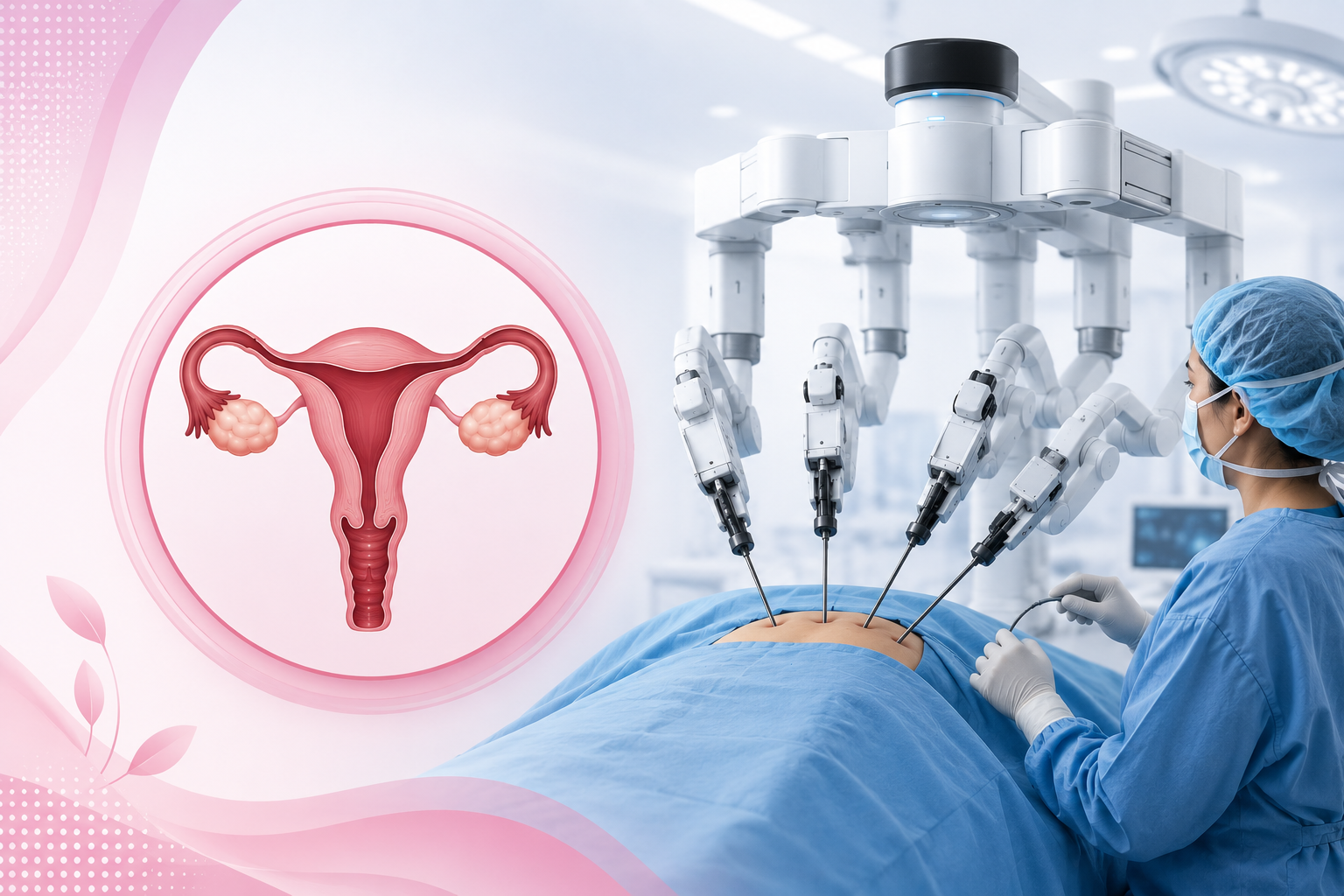
Robotic-assisted laparoscopic hysterectomy (RALH) uses the da Vinci or similar robotic system to provide the surgeon with a 3D high-definition view and instruments with greater range of motion than standard laparoscopy. This is particularly advantageous for complex cases — large uteri, extensive adhesions, previous pelvic surgery, or obesity — where standard laparoscopy may be difficult.

Robotic vs Laparoscopic vs Open: Key Differences

  • Hospital stay: Open: 5–7 days | Laparoscopic: 1–2 days | Robotic: 1–2 days
  • Recovery time: Open: 6–8 weeks | Laparoscopic: 2–3 weeks | Robotic: 2–3 weeks
  • Blood loss: Open: Highest | Laparoscopic: Lower | Robotic: Lowest
  • Scar size: Open: 10–15 cm | Laparoscopic: 3–4 small ports | Robotic: 3–4 small ports
  • Complication rates: Open: Higher | Laparoscopic: Lower | Robotic: Comparable or slightly lower for complex cases
  • Surgeon precision: Open: Good | Laparoscopic: Good | Robotic: Excellent, especially in restricted spaces

Which Approach Is Best for You?

The optimal surgical approach depends on the size and condition of your uterus, your BMI, your surgical history, the indication for surgery, and your surgeon’s expertise. Dr. Mendiratta will discuss all options and recommend the approach that offers the best balance of safety, efficacy, and recovery for your specific situation.

The most important factor in the success of any hysterectomy — open, laparoscopic, or robotic — is surgeon experience. Dr. Mendiratta has performed hundreds of minimal-access hysterectomies and brings the same precision and attention to each procedure.

Recovery After Robotic/Laparoscopic Hysterectomy

  • Day 1–2: In hospital; walking the day after surgery
  • Week 1–2: Resting at home; light activity permitted
  • Week 3–4: Returning to desk work and light household duties
  • Week 6: Most women have returned to full normal activity, including exercise
  • No vaginal intercourse for 6–8 weeks after any type of hysterectomy

Risks of Hysterectomy

All surgery carries risks. For robotic/laparoscopic hysterectomy, these include:

  • Bleeding (rare, occasionally requiring transfusion)
  • Infection (reduced compared to open surgery)
  • Injury to adjacent structures (ureter, bladder, bowel) — very rare in experienced hands
  • Anaesthetic complications
  • Deep vein thrombosis (prevented by early mobilisation and compression stockings)

Serious complications are uncommon when surgery is performed by an experienced minimal-access surgeon. Dr. Mendiratta will discuss all risks with you in detail at your pre-operative consultation.

Frequently Asked Questions (FAQs)

Q1. Will I go into menopause after hysterectomy?

Only if your ovaries are removed at the same time (bilateral oophorectomy). If your ovaries are preserved — which is the standard approach for benign conditions in younger women — you will not experience surgical menopause.

Q2. Can I have a robotic hysterectomy even if I am overweight?

Yes. Robotic surgery is often preferred for women with higher BMI because the robotic system provides better access and visualisation in a deeper pelvis. Discuss this with Dr. Mendiratta during your consultation.

Q3. How long does a robotic hysterectomy take?

Typically 1.5–3 hours depending on the complexity of the case.

Q4. Will my sex life change after hysterectomy?

Most women report no change or even improvement in their sex life after hysterectomy, particularly if the procedure relieved pain, bleeding, or pressure. Vaginal length is preserved in all standard hysterectomy techniques.

Q5. How do I know if I need a total vs subtotal hysterectomy?

A total hysterectomy removes the uterus and cervix. A subtotal (supracervical) hysterectomy removes the uterus but leaves the cervix. The decision depends on several factors including the indication for surgery. Dr. Mendiratta will explain which is most appropriate for you.


Get In Touch With Dr. Shweta Mendiratta

Phone: +91-8130048652 | +91-9999093503

Email: shwetasmendiratta@gmail.com

Yatharth Super Speciality Hospital

Plot No 9, Sector-20, Krishna Nagar, New Industrial Township, Faridabad, Haryana 121007

Phone: +91 8178-939442

Mediclub Gynae ‘N’ Neuro Clinic

Pilot No. 857 Sector 21 C, Faridabad Delhi, Haryana 121001


How to Choose the Right Surgeon for Robotic Gynecological Procedures

Choosing the right surgeon for robotic gynecological procedures is a crucial decision that can significantly impact your health and recovery. Robotic surgery has revolutionized the way gynecological procedures are performed, offering numerous benefits such as smaller incisions, faster recovery, and minimal scarring. However, to ensure the success of the surgery, it is essential to select an experienced and skilled surgeon. In Faridabad, Dr. Shweta Mendiratta is renowned as the best robotic gynae surgeon in Faridabad and one of the leading specialists in robotic gynecological surgery. Here’s how you can make the right choice when selecting a surgeon for robotic gynecological procedures.

  1. Expertise and Experience

When looking for a surgeon for robotic gynecological surgery, experience is one of the most important factors to consider. You should look for a surgeon who has extensive experience in performing robotic gynecological surgery in Faridabad and has a proven track record of successful outcomes. Dr. Shweta Mendiratta, known as the best robotic gynae surgeon in India, has years of experience in performing minimally invasive surgeries using robotic technology, ensuring high-quality care and precision for her patients.

  1. Training and Certification

Robotic surgeries require advanced skills and specific training. It’s essential to ensure that the surgeon you choose has undergone specialized training in robotic surgery. A well-trained surgeon will have mastered the use of the robotic system, which allows for enhanced precision and minimal disruption to surrounding tissues. Dr. Shweta Mendiratta is recognized for her advanced training and qualifications in robotic gynecology, making her one of the most trusted surgeons for robotic gynecological surgery in Faridabad.

  1. Reputation and Patient Reviews

Before making your decision, it’s a good idea to research patient reviews and testimonials. Word of mouth and feedback from previous patients can offer valuable insights into the surgeon’s skill, care, and professionalism. Dr. Shweta Mendiratta has a stellar reputation as the best robotic gynae surgeon in Faridabad. Many of her patients rave about her compassionate care, personalized treatment plans, and successful surgical outcomes.

  1. Personalized Approach to Care

A good surgeon should provide personalized care and attention to your needs. They should thoroughly explain the procedure, answer all your questions, and ensure that you are comfortable and informed before the surgery. Dr. Shweta Mendiratta is known for her compassionate approach and for taking the time to educate her patients about their conditions and treatment options. As the best robotic gynae surgeon in India, she ensures that every patient receives the best possible care and support throughout the entire surgical process.

  1. State-of-the-Art Technology

Robotic surgeries require advanced technology to achieve optimal results. The surgeon you choose should have access to the latest robotic systems and equipment. Dr. Shweta Mendiratta performs surgeries using state-of-the-art robotic technology, ensuring that her patients benefit from the most advanced techniques available in the field of gynecology.

  1. Success Rates and Outcomes

One of the most critical factors when choosing a surgeon is the success rate of their procedures. You should inquire about the surgeon’s success rates, particularly for the specific procedure you need. Dr. Shweta Mendiratta has a high success rate for robotic gynecological surgery in Faridabad, and her expertise ensures that patients experience minimal complications and quick recoveries.

  1. Follow-Up Care and Support

Post-operative care is just as important as the surgery itself. Make sure the surgeon offers comprehensive follow-up care and support to monitor your recovery. Dr. Shweta Mendiratta provides thorough post-surgical care to ensure that her patients recover smoothly and that any potential complications are promptly addressed.

Conclusion

Choosing the right surgeon for robotic gynecological procedures is a critical step in ensuring the success of your surgery and your overall health. By considering factors such as experience, training, reputation, and personalized care, you can find a surgeon who is well-equipped to provide the best treatment. Dr. Shweta Mendiratta, the best robotic gynae surgeon in Faridabad, offers all these qualities and more, making her an excellent choice for anyone seeking robotic gynecological surgery. With her expertise and commitment to patient care, you can be confident that you’re in the best hands for your surgery.


Why Choose the Best Robotic Gynae Surgeon in Faridabad for Advanced Gynecological Care?

In the field of gynecology, technology is advancing rapidly, and robotic surgery is emerging as a game-changer. Women facing complex gynecological issues can now opt for minimally invasive procedures that promise precision, faster recovery, and better outcomes. If you are considering advanced gynecological care, choosing the Best Robotic Gynae Surgeon in Faridabad ensures that you receive cutting-edge treatment tailored to your needs. Among the top surgeons in the field is Dr. Shweta Mendiratta, a pioneer in robotic-assisted surgeries in Faridabad.

What Is Robotic Surgery?

Robotic surgery in gynecology involves the use of robotic systems to assist surgeons in performing precise and minimally invasive procedures. These robotic systems are equipped with advanced technology that allows surgeons to perform delicate operations through small incisions with enhanced accuracy. The most used system is the da Vinci Surgical System, which provides a 3D high-definition view and allows the surgeon to control the robotic arms with precision.

Benefits of Robotic Gynecological Surgery

  1. Minimally Invasive: Robotic surgery is performed through tiny incisions, which means less tissue damage compared to traditional open surgery. This results in a quicker recovery, reduced scarring, and minimal discomfort for patients.
  2. Enhanced Precision: Robotic systems provide surgeons with superior control and flexibility. The robotic arms can move in ways that human hands cannot, allowing for more precise removal of tissues and suturing, especially in complex cases.
  3. Fewer Complications: Due to the accuracy of robotic systems, there is a significantly lower risk of complications such as infections and excessive bleeding. This makes robotic surgery a safer option for women with conditions like endometriosis, fibroids, and ovarian cysts.
  4. Faster Recovery: With smaller incisions and less trauma to the body, patients recover faster. This means shorter hospital stays and a quicker return to daily activities, which is particularly beneficial for women balancing careers, families, and personal health.
  5. Better Outcomes: Studies have shown that robotic surgery leads to better outcomes, with a higher success rate and reduced risk of recurrence for conditions like uterine fibroids and pelvic organ prolapse.

Why Choose Dr. Shweta Mendiratta, the Best Robotic Gynae Surgeon in Faridabad?

When it comes to robotic gynecological surgery, Dr. Shweta Mendiratta stands out as the Best Robotic Gynae Surgeon in Faridabad. With extensive experience and advanced training in robotic-assisted procedures, Dr. Shweta has helped countless women achieve better health outcomes. She specializes in a wide range of gynecological issues, including:

  • Uterine fibroids
  • Endometriosis
  • Ovarian cysts
  • Pelvic organs prolapse
  • Hysterectomies

Dr. Mendiratta’s expertise, combined with the precision of robotic surgery, ensures that patients receive the best possible care. Her compassionate approach and focus on individualized treatment plans have earned her a reputation as a trusted and reliable gynecological surgeon in Faridabad.

Conclusion

Robotic gynecological surgery offers a host of benefits, from enhanced precision and faster recovery to fewer complications and better outcomes. If you’re seeking advanced gynecological care, choosing the Best Robotic Gynae Surgeon in Faridabad is crucial. Dr. Shweta Mendiratta is leading the charge in providing women with safe, effective, and minimally invasive solutions for complex gynecological conditions. Don’t compromise on your health—consult with Dr. Mendiratta to explore the latest in robotic-assisted surgery and experience a smoother, quicker recovery.

Take the step toward a healthier future today!