
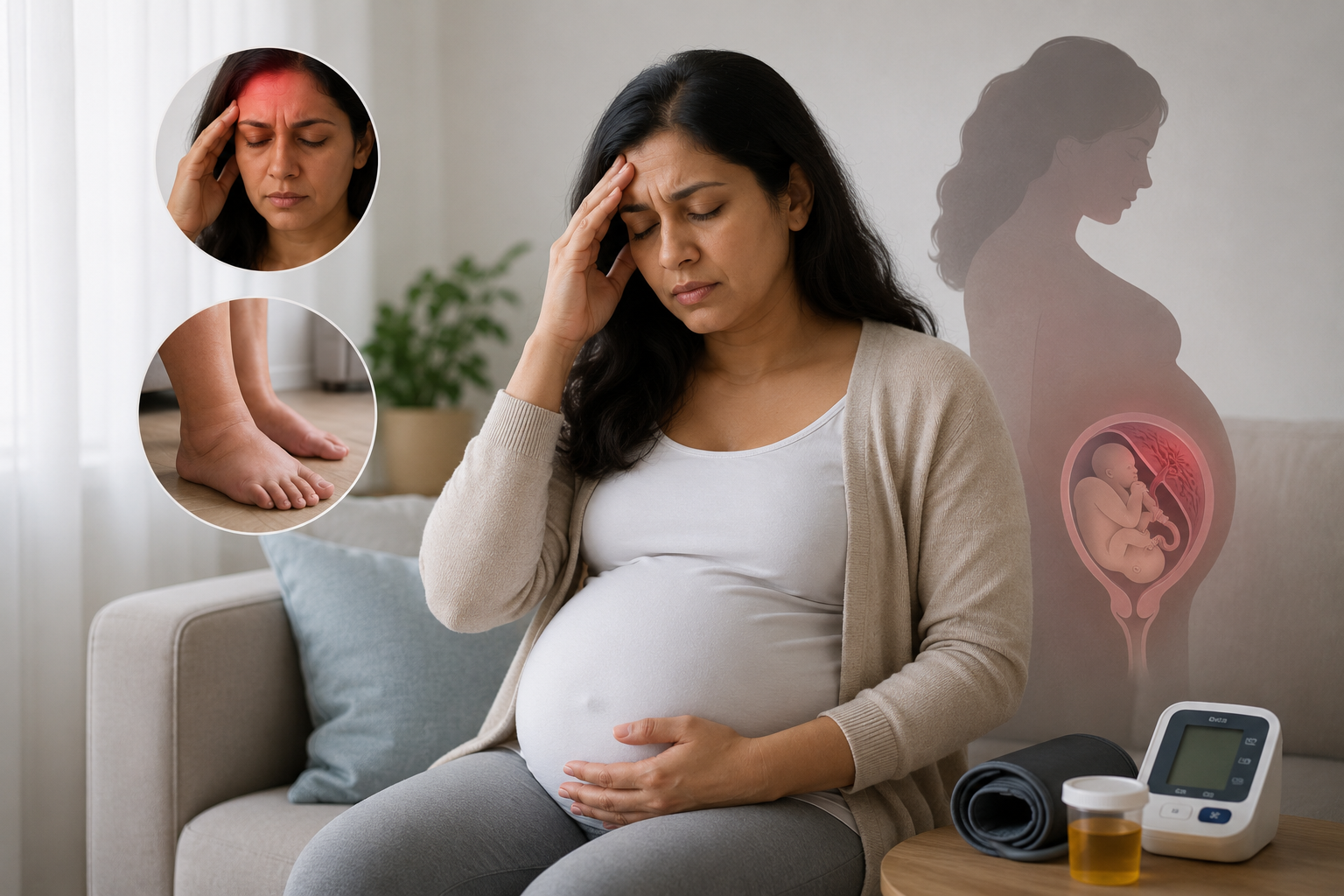
Preeclampsia is responsible for approximately 17% of maternal deaths in India — making it one of the most dangerous complications of pregnancy and one that every pregnant woman, her family, and her doctor must take seriously. Yet it often develops with no obvious warning signs, which is why it is called the silent danger of pregnancy. Dr. Shweta Mendiratta, high-risk obstetrics specialist in Faridabad, explains what preeclampsia is, who is at risk, and what every family must know.
What Is Preeclampsia?
Preeclampsia is a serious pregnancy complication characterised by high blood pressure (hypertension) that develops after 20 weeks of gestation in a woman who previously had normal blood pressure, combined with signs of damage to organ systems — most often the kidneys (manifesting as protein in the urine), liver, brain, or placenta.
Without timely diagnosis and management, preeclampsia can rapidly progress to eclampsia (seizures), HELLP syndrome (a life-threatening combination of haemolysis, elevated liver enzymes, and low platelet count), stroke, kidney failure, and maternal or fetal death.
Who Is at Risk?
- First-time pregnancies (nulliparity)
- Pre-existing hypertension or kidney disease
- Diabetes (type 1, type 2, or gestational)
- Multiple pregnancy (twins, triplets)
- Obesity (BMI above 30)
- Family history of preeclampsia
- Previous preeclampsia in a prior pregnancy
- Autoimmune conditions (lupus, antiphospholipid syndrome)
- Age over 40
- Short interval between pregnancies (less than 2 years) or very long interval (over 10 years)
Recognising the Warning Signs
Many women with preeclampsia have no symptoms — which is why regular blood pressure monitoring at every antenatal visit is non-negotiable. However, warning signs that require immediate medical attention include:
- Sudden or severe headache not relieved by paracetamol
- Visual disturbances: blurring, flashing lights, or temporary vision loss
- Severe upper abdominal or right-sided pain (a sign of liver involvement)
- Sudden swelling of the face, hands, or feet (especially if rapid and severe)
- Feeling very unwell or confused
- Decreased fetal movements
If you experience any of these symptoms in pregnancy, go to the hospital immediately — do not wait for your next routine appointment.
How Is Preeclampsia Diagnosed?
Blood pressure: Readings of 140/90 mmHg or above on two occasions at least 4 hours apart (or 160/110 mmHg on a single reading) after 20 weeks of gestation.
Urine testing: Proteinuria (protein in the urine) detected by dipstick or confirmed by a 24-hour urine collection.
Blood tests: Full blood count (platelets), liver enzymes (ALT, AST), creatinine, uric acid, and LDH — to assess organ involvement.
Fetal monitoring: Ultrasound for fetal growth, amniotic fluid, and Doppler studies of umbilical blood flow — preeclampsia can restrict placental blood flow and impair fetal growth.
Management of Preeclampsia
Mild to Moderate Preeclampsia
For mild preeclampsia, close monitoring may allow the pregnancy to continue with:
- Antihypertensive medications to keep blood pressure below 150/100 mmHg
- Regular blood tests and fetal monitoring
- Rest, though strict bed rest is no longer recommended
- Low-dose aspirin (started before 16 weeks in high-risk women) for prevention
Severe Preeclampsia
Severe preeclampsia (BP above 160/110, or with severe organ involvement) typically requires hospital admission, IV antihypertensive therapy, intravenous magnesium sulphate (to prevent seizures), and plans for delivery as soon as it is safe.
Delivery
The only definitive cure for preeclampsia is delivery. The timing of delivery balances the risks to the mother of continuing the pregnancy against the risks to the baby of preterm birth. Dr. Mendiratta works with the neonatology team to optimise the timing and mode of delivery for each patient.
Preeclampsia Prevention
For women identified as high risk, daily low-dose aspirin (75–150 mg) started before 16 weeks of gestation has strong evidence for reducing the risk of preeclampsia. Calcium supplementation (1.5–2g per day) is also recommended in women with low dietary calcium intake, which is common in India.
Frequently Asked Questions (FAQs)
Q1. Can preeclampsia recur in a subsequent pregnancy?
Yes. Women who have had preeclampsia have a 20–25% risk of it recurring in future pregnancies. This risk is higher if the preeclampsia was severe or early-onset. Close monitoring and prophylactic aspirin in subsequent pregnancies are essential.
Q2. Does preeclampsia affect the baby?
Preeclampsia restricts blood flow through the placenta, which can impair fetal growth (intrauterine growth restriction). If delivery is required prematurely, the baby may need neonatal intensive care.
Q3. Will preeclampsia go away after delivery?
In most cases, blood pressure and urine protein normalise within 6–12 weeks after delivery. However, women who have had preeclampsia have a higher lifelong risk of hypertension, stroke, and cardiovascular disease and should be monitored accordingly.
Q4. Is home blood pressure monitoring safe in pregnancy?
Yes, and it is recommended for women at risk of preeclampsia. Regular home monitoring allows earlier detection of rising blood pressure between clinic visits.
Q5. Can I have preeclampsia without protein in my urine?
Yes. Revised criteria for preeclampsia no longer require proteinuria if there is evidence of other organ involvement — such as low platelets, elevated liver enzymes, impaired kidney function, or neurological symptoms.
Get In Touch With Dr. Shweta Mendiratta
Phone: +91-8130048652 | +91-9999093503
Email: shwetasmendiratta@gmail.com
Yatharth Super Speciality Hospital
Plot No 9, Sector-20, Krishna Nagar, New Industrial Township, Faridabad, Haryana 121007
Phone: +91 8178-939442
Mediclub Gynae ‘N’ Neuro Clinic
Plot No. 857 Sector 21 C, Faridabad Delhi, Haryana 121001