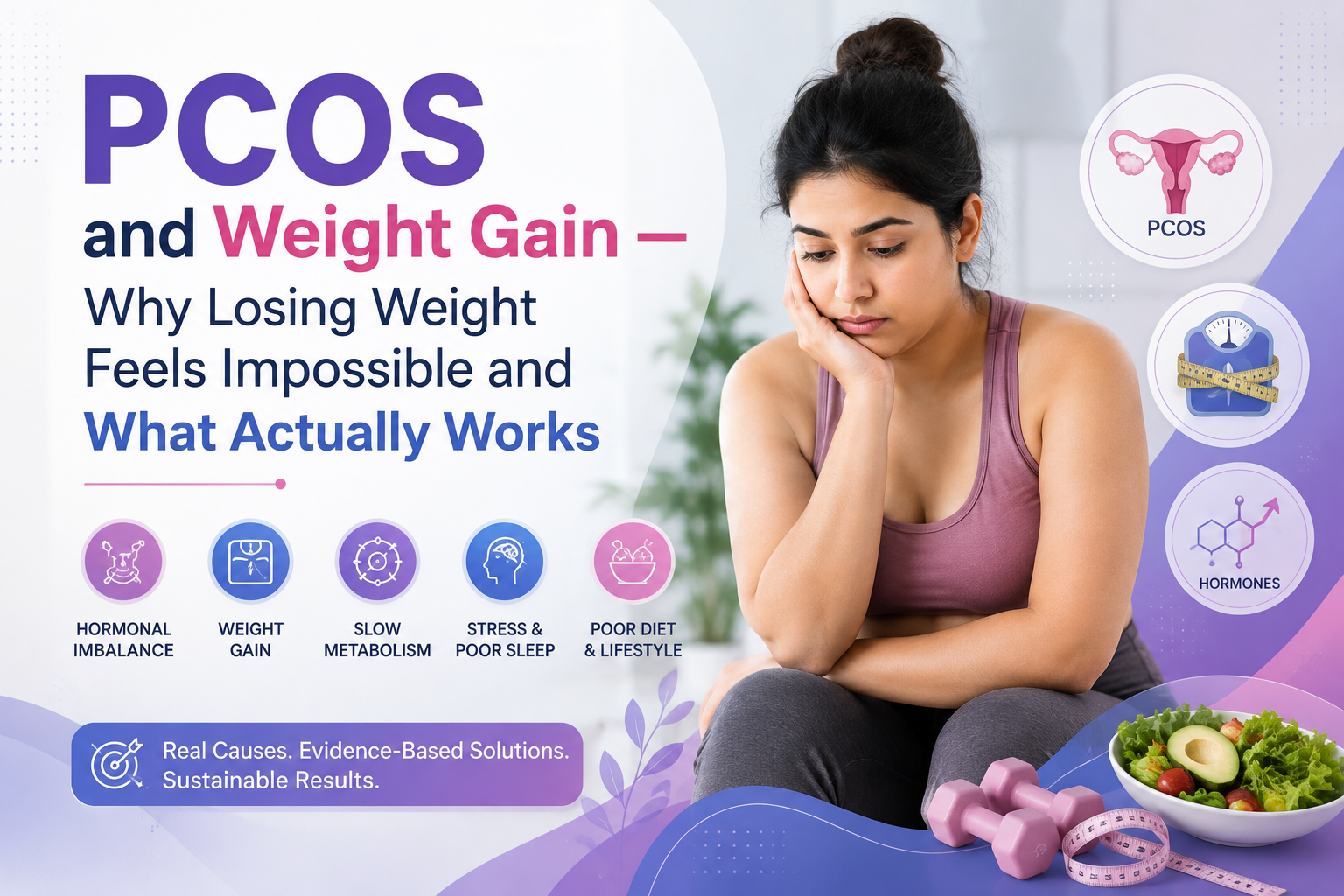
If you have PCOS and have been told to ‘just lose weight,’ you are not alone — and you are not imagining that it is harder for you than for others. The relationship between PCOS and weight is deeply biological, and understanding the science behind it is the first step towards real, sustainable change. Dr. Shweta Mendiratta, specialist gynaecologist in Faridabad, explains why PCOS makes weight management so difficult and, more importantly, what actually works.
Why PCOS Causes Weight Gain
Insulin Resistance
The most critical driver of weight gain in PCOS is insulin resistance. In women with PCOS, the body’s cells do not respond properly to insulin, the hormone responsible for transporting glucose into cells. As a result, the pancreas produces more insulin to compensate. High insulin levels directly stimulate the ovaries to produce more androgens and also signal the body to store fat — particularly visceral fat around the abdomen.
Studies show that up to 70% of women with PCOS have insulin resistance, regardless of their body weight. Even thin women with PCOS can be metabolically insulin resistant.
Hormonal Imbalances
Elevated androgens lower adiponectin (a hormone that promotes fat breakdown) and raise leptin resistance, making the body more prone to storing fat and less responsive to hunger cues. Women with PCOS also tend to have lower levels of sex hormone-binding globulin (SHBG), which further amplifies the effects of androgens.
Chronic Low-Grade Inflammation
PCOS is associated with chronic, low-grade inflammation, which impairs metabolic function and promotes fat storage. Inflammatory markers such as CRP (C-reactive protein) are consistently elevated in women with PCOS, even in the absence of infection.
Sleep Disruption
Many women with PCOS suffer from disrupted sleep or sleep apnoea, both of which worsen insulin resistance and increase cortisol levels — a stress hormone that promotes abdominal fat accumulation.
PCOS and Metabolic Syndrome
Metabolic syndrome — a cluster of conditions including abdominal obesity, high blood sugar, high triglycerides, low HDL cholesterol, and high blood pressure — is significantly more common in women with PCOS. In India, the risk is amplified by genetic predisposition to insulin resistance and a largely sedentary, carbohydrate-rich dietary pattern. Left unaddressed, PCOS-related metabolic syndrome substantially increases the lifetime risk of type 2 diabetes and cardiovascular disease.
What Actually Works for PCOS Weight Loss
- Low-Glycaemic Index (Low-GI) Diet
A low-GI diet reduces the spikes in blood sugar and insulin that drive fat storage. This means:
- Choosing whole grains (brown rice, millets, oats) over refined carbohydrates (white rice, maida, white bread)
- Including plenty of non-starchy vegetables (leafy greens, brinjal, beans)
- Eating adequate protein at every meal (dal, paneer, eggs, legumes, lean meats)
- Prioritising healthy fats (nuts, seeds, olive oil, avocado) over trans and saturated fats
- Reducing sugar, sugary drinks, and ultra-processed snacks
The traditional Indian diet — when centred on dals, vegetables, millets, and moderate portions — is actually well-suited to PCOS management. The problem arises with the modern shift towards refined carbohydrates and processed foods.
- Strength Training
Resistance exercise is particularly effective for improving insulin sensitivity. Building muscle increases the number of glucose transporters in muscle cells, helping to ‘mop up’ blood glucose without requiring high insulin levels. Aim for at least 2–3 sessions of strength training per week.
- Aerobic Exercise
Brisk walking, cycling, swimming, or dance — at least 150 minutes per week — reduces inflammation, lowers cortisol, and improves cardiovascular health. Even 10–15 minute walks after meals can meaningfully reduce post-meal blood sugar spikes.
- Stress Management
Chronic stress raises cortisol, which worsens insulin resistance and promotes abdominal fat. Practices such as yoga, mindfulness meditation, and adequate sleep (7–9 hours per night) are not optional extras — they are essential components of PCOS management.
- Medication When Necessary
Dr. Mendiratta may prescribe metformin to improve insulin sensitivity, myo-inositol supplementation (which has shown strong evidence in PCOS), or other targeted medications depending on your profile. Medication works best as a complement to lifestyle changes, not a substitute.
- Sustainable Targets, Not Crash Diets
Crash diets are counterproductive for PCOS. They raise cortisol, slow metabolism, and often lead to binge eating. A loss of 0.5–1 kg per week through a moderate caloric deficit is both achievable and sustainable, and even this modest loss can have dramatic effects on PCOS symptoms.
Setting Realistic Expectations
Weight loss with PCOS is slower than it is for women without the condition — this is not a failure of willpower, it is biology. With the right approach, most women with PCOS can achieve meaningful improvements in their symptoms, fertility, and metabolic health. The goal should be health, not a number on a scale.
Frequently Asked Questions (FAQs)
Q1. How much weight do I need to lose to see PCOS improvement?
Even a 5–10% reduction in body weight can restore menstrual regularity, improve ovulation, and reduce androgen levels in overweight women with PCOS.
Q2. Is intermittent fasting safe for PCOS?
Some women with PCOS benefit from intermittent fasting (such as a 14:10 eating window), but it is not suitable for everyone. Women with hypoglycaemia, eating disorder history, or high stress should use caution. Consult Dr. Mendiratta before starting.
Q3. Can supplements help with PCOS weight loss?
Myo-inositol and D-chiro-inositol have the strongest evidence for PCOS. Vitamin D supplementation is also beneficial if you are deficient. Omega-3 fatty acids can reduce inflammation. Always discuss supplements with your doctor before starting.
Q4. My thyroid is normal but I still can’t lose weight — why?
Insulin resistance from PCOS can cause weight loss resistance even when thyroid function is normal. Your doctor may also check reverse T3 or advanced thyroid markers if standard tests are normal but symptoms persist.
Q5. Does PCOS ever go away after menopause?
The ovulatory dysfunction and cysts typically resolve after menopause, but the metabolic risks (insulin resistance, cardiovascular disease) persist. Lifelong metabolic monitoring is important.
Get In Touch With Dr. Shweta Mendiratta
Phone: +91-8130048652 | +91-9999093503
Email: shwetasmendiratta@gmail.com
Yatharth Super Speciality Hospital
Plot No 9, Sector-20, Krishna Nagar, New Industrial Township, Faridabad, Haryana 121007
Phone: +91 8178-939442
Mediclub Gynae ‘N’ Neuro Clinic
Plot No. 857 Sector 21 C, Faridabad Delhi, Haryana 121001