
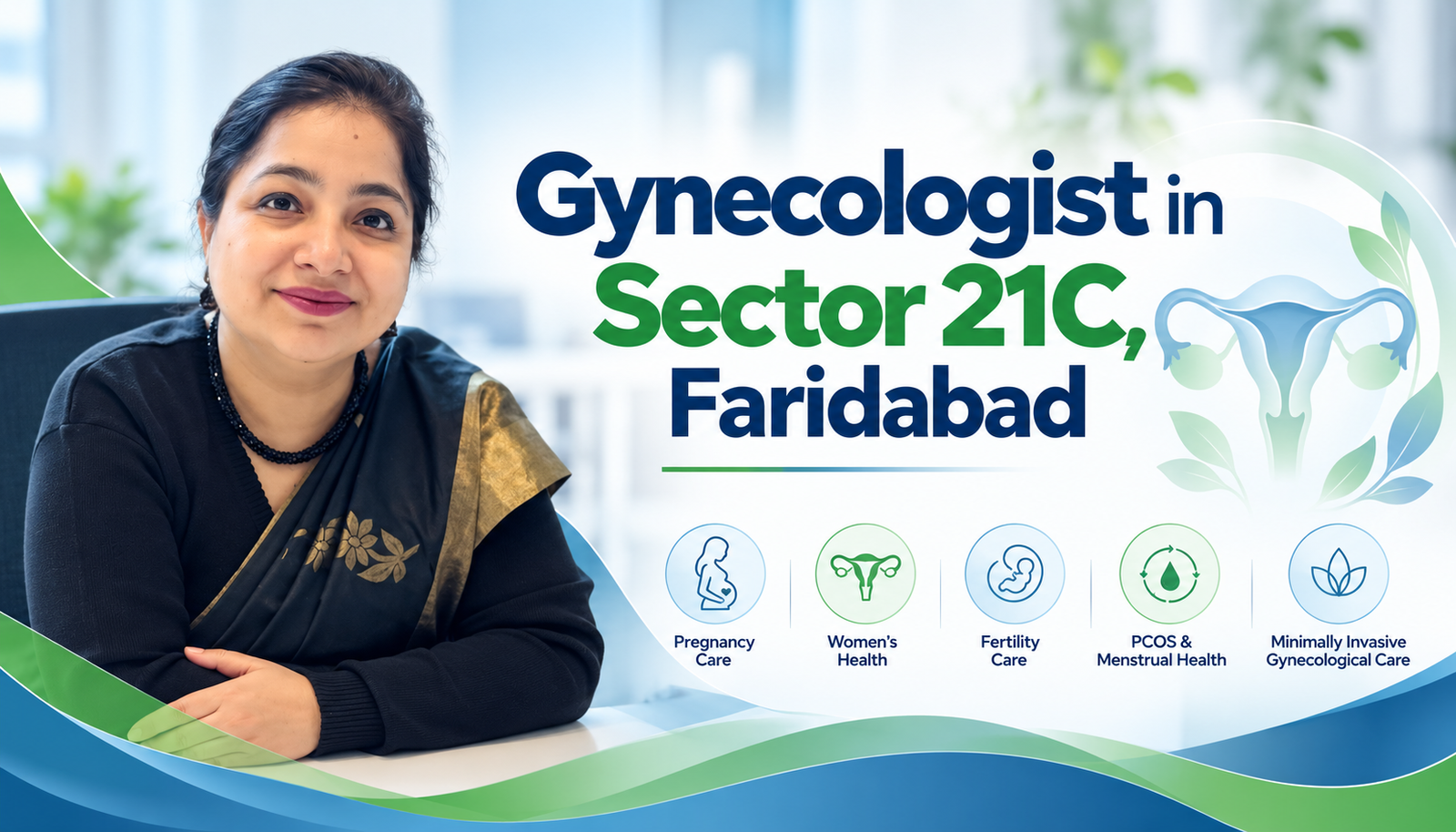
For women living in Sector 21C and nearby areas of Faridabad, finding a gynecologist who can provide care across different stages of life can make women’s healthcare more convenient and consistent. From irregular periods and PCOS to pregnancy, fertility concerns, fibroids, endometriosis and menopause, gynecological needs can change considerably over time.
A gynecologist can help women understand symptoms early, identify conditions that require treatment and provide appropriate preventive and reproductive healthcare.
Dr. Shweta Mendiratta is a gynecologist and obstetrician in Faridabad with more than 15 years of experience. She is Director & Head – Unit II, Obstetrics & Gynecology at Yatharth Hospital, Sector 20, Faridabad, and her areas of expertise include high-risk pregnancy, infertility, minimally invasive gynecological procedures, hysteroscopy and women’s healthcare.
Importantly for women searching specifically in this locality, her official website lists Mediclub Gynae ‘N’ Neuro Clinic in Sector 21C, Faridabad as one of her consultation locations.
When Should Women in Sector 21C See a Gynecologist?
You do not necessarily need to wait until a gynecological problem becomes severe before consulting a specialist.
A gynecologist can evaluate concerns such as:
- Irregular or missed periods
- Very heavy menstrual bleeding
- Severe period pain
- Persistent pelvic pain
- Unusual vaginal discharge
- Recurrent vaginal infections
- PCOS symptoms
- Difficulty becoming pregnant
- Pregnancy-related concerns
- Fibroids
- Endometriosis
- Menopause or perimenopause symptoms
- Abnormal bleeding
- Concerns related to contraception or reproductive health
Some symptoms may have relatively simple explanations, while others may require examination or investigations.
For example, irregular periods can occur for several reasons and should not automatically be attributed to PCOS. Dr. Shweta’s recent article on PCOS and irregular periods explains why proper evaluation matters
Women’s Health Concerns Commonly Managed by a Gynecologist
Gynecological care covers much more than pregnancy.
PCOS and Irregular Periods
Polycystic ovary syndrome, commonly known as PCOS, can be associated with irregular periods, acne, unwanted hair growth, weight changes and difficulties with ovulation.
However, not every woman with irregular periods has PCOS.
A gynecological evaluation may consider menstrual history, symptoms, medical history and appropriate investigations before determining the likely cause.
Treatment is individualized depending on the woman’s symptoms, reproductive goals and overall health.
Painful or Heavy Periods
Period-related symptoms can vary considerably between women.
Occasional discomfort may be manageable, but severe menstrual pain, unusually heavy bleeding or periods that interfere with everyday activities deserve medical attention.
Persistent heavy bleeding may contribute to anemia and can sometimes be associated with conditions such as fibroids, adenomyosis or hormonal disturbances.
Rather than simply accepting severe period symptoms as something every woman has to tolerate, it can be useful to discuss persistent symptoms with a gynecologist.
Fibroids and Uterine Problems
Fibroids are non-cancerous growths that develop in or around the uterus.
Some women with fibroids have no symptoms, while others may experience:
- Heavy periods
- Pelvic pressure
- Abdominal discomfort
- Pain
- Frequent urination
- Difficulty conceiving in selected cases
The impact of fibroids depends on their size, number and location.
Importantly, having fibroids does not automatically mean surgery is required.
Dr. Shweta’s article on pregnancy with fibroids explains that many women with fibroids can become pregnant, although certain fibroids can affect conception or pregnancy depending on their characteristics.
Endometriosis and Pelvic Pain
Endometriosis occurs when tissue similar to the lining of the uterus grows outside the uterus.
It may be associated with:
- Painful periods
- Pelvic pain
- Pain during intercourse
- Pain associated with bowel movements or urination during periods
- Difficulty conceiving
Symptoms can vary substantially between women.
Persistent pelvic pain should not simply be dismissed as “normal period pain.” A gynecologist can assess the symptoms and determine whether further investigation is appropriate.
Pregnancy and Obstetric Care for Women in Sector 21C
Pregnancy is another important reason women seek an experienced obstetrician.
Pregnancy care generally begins before conception and continues through pregnancy, delivery and the postpartum period.
Preconception Care
A preconception consultation can be useful for women planning pregnancy, particularly when there are existing medical conditions or previous pregnancy concerns.
A consultation may cover:
- General health
- Medical history
- Previous pregnancies
- Medications
- Nutrition
- Lifestyle
- Existing conditions such as PCOS, thyroid disorders or diabetes
- Fertility considerations
Dr. Shweta’s pregnancy-planning guide explains why discussing health conditions and preparation before conception can be valuable.
Antenatal Care
Once pregnancy occurs, regular antenatal care helps monitor the health of both mother and baby.
Depending on the pregnancy, care can involve:
- Routine pregnancy monitoring
- Ultrasound and recommended screening
- Maternal health assessment
- Fetal growth monitoring
- Nutritional guidance
- Screening for pregnancy-related complications
- Birth planning
High-Risk Pregnancy
Some pregnancies require closer monitoring because of maternal health conditions, previous pregnancy complications or factors affecting the pregnancy.
Dr. Shweta’s official profile describes her experience in identifying and managing high-risk pregnancies according to established guidelines and protocols.
Women with a high-risk pregnancy may benefit from coordinated care and access to appropriate hospital facilities.
Infertility and Fertility Evaluation
Difficulty conceiving can be emotionally challenging, and women may sometimes blame themselves for infertility.
However, infertility can involve female factors, male factors, both partners or sometimes unexplained factors.
Female factors may include:
- Ovulation disorders
- PCOS
- Endometriosis
- Fallopian tube problems
- Uterine abnormalities
- Fibroids
- Age-related changes
A fertility evaluation is not necessarily about immediately proceeding to advanced treatment.
The first step is understanding the possible cause.
Dr. Shweta’s existing infertility guide discusses common causes of infertility, including ovulation disorders, endometriosis, fallopian-tube problems and uterine abnormalities.
Depending on the circumstances, both partners may need evaluation.
Minimally Invasive Gynecological Surgery
Some gynecological conditions may require a procedure or surgery when medication or observation is not appropriate.
Dr. Shweta’s professional profile lists experience in laparoscopic surgery, hysteroscopy, conventional gynecological surgery and hysterectomy, along with infertility-related laparoscopic procedures.
Laparoscopic Surgery
Laparoscopy uses small incisions and a camera to allow surgeons to examine or operate inside the abdomen.
It may be considered for selected conditions such as:
- Certain ovarian conditions
- Endometriosis
- Selected fibroids
- Infertility-related evaluation
- Other gynecological conditions
Hysteroscopy
Hysteroscopy allows a doctor to examine the inside of the uterus using a thin camera.
It can be useful for evaluating or treating selected problems within the uterine cavity, including certain polyps or fibroids.
Not every patient requires minimally invasive surgery. The appropriate approach depends on the diagnosis, symptoms, reproductive plans and overall health.
Why Choosing the Right Gynecologist Matters
A gynecologist may become a long-term healthcare professional in a woman’s life.
When choosing a gynecologist, consider:
Experience and Qualifications
Look for appropriate qualifications and experience in the areas relevant to your needs.
Range of Care
Women may prefer a doctor who can provide care across menstrual health, pregnancy, fertility and other gynecological concerns.
Communication
You should feel comfortable discussing personal symptoms and asking questions.
Follow-Up
Many gynecological conditions require monitoring rather than a single consultation.
Hospital Support
For pregnancy, surgery or conditions that may require additional care, access to appropriate hospital facilities can be important.
Dr. Shweta’s profile lists MBBS, MS in Obstetrics & Gynecology, DNB, FICOG and CIMP, along with more than 15 years of experience. She is also described as Director & Head – Unit II, Obstetrics & Gynecology at Yatharth Hospital, Sector 20, Faridabad.
Why Location Matters When Choosing a Gynecologist
For women living in Sector 21C, having access to a gynecologist in or around the locality can make ongoing care easier.
This can be particularly relevant for:
- Pregnancy appointments
- Follow-up consultations
- Fertility evaluations
- Menstrual problems requiring monitoring
- Post-procedure reviews
- Chronic gynecological conditions
Convenience does not replace medical expertise, but easier access can help patients maintain continuity of care.
For pregnancy in particular, women may have several appointments throughout the course of pregnancy, making the location of their healthcare provider an important practical consideration.
Where Can Women in Sector 21C Consult Dr. Shweta Mendiratta?
Dr. Shweta Mendiratta’s official website currently lists two consultation locations in Faridabad.
Mediclub Gynae ‘N’ Neuro Clinic – Sector 21C
Mediclub Gynae ‘N’ Neuro Clinic
Address: Pilot No. 857, Sector 21C, Faridabad, Haryana 121001/121012 as reflected across the practice’s listings.
Her official website lists the clinic as one of her consultation locations.
The website currently lists clinic consultation hours as 5:30 PM–7:30 PM, with Thursday and Sunday shown as closed on the contact page. Because clinic schedules can change, patients should confirm the current timing before visiting.
Yatharth Super Speciality Hospital – Sector 20
Yatharth Super Speciality Hospital
Address: Plot No. 9, Sector 20, Krishna Nagar, New Industrial Township, Faridabad, Haryana 121007.
The official website currently lists Dr. Shweta’s hospital consultation hours as Monday–Saturday, 10:00 AM–4:00 PM.
For the most current appointment information, patients can contact the practice directly.
Frequently Asked Questions
1. Who is a gynecologist in Sector 21C, Faridabad?
Dr. Shweta Mendiratta is a gynecologist and obstetrician whose official website lists Mediclub Gynae ‘N’ Neuro Clinic in Sector 21C, Faridabad, as one of her consultation locations.
2. What problems can a gynecologist treat?
A gynecologist can evaluate and manage concerns including irregular periods, PCOS, heavy menstrual bleeding, pelvic pain, fibroids, endometriosis, infertility, pregnancy-related concerns and menopause symptoms.
3. Should I see a gynecologist for irregular periods?
Persistent or recurrent irregular periods are worth discussing with a gynecologist, particularly if they are associated with other symptoms such as acne, unwanted hair growth, significant weight changes or difficulty conceiving.
4. When should I see a gynecologist for infertility?
If you are having difficulty conceiving, a gynecological consultation can help identify possible female reproductive factors and determine whether further fertility evaluation is appropriate. Both partners may need evaluation depending on the circumstances.
5. Can women with fibroids become pregnant?
Yes. Many women with fibroids conceive naturally. However, the size, number and location of fibroids can influence fertility or pregnancy in some cases.
6. Does every gynecological problem require surgery?
No. Many gynecological conditions can be managed with observation, medication or other non-surgical approaches. Surgery is considered when clinically appropriate.
7. Does Dr. Shweta Mendiratta provide pregnancy care?
Yes. Her official profile describes expertise in obstetrics, routine and high-risk pregnancy management, delivery and pre- and post-pregnancy care.
8. Where does Dr. Shweta Mendiratta consult in Faridabad?
Her official website currently lists Yatharth Super Speciality Hospital, Sector 20, and Mediclub Gynae ‘N’ Neuro Clinic, Sector 21C, Faridabad.
Final Thoughts
Women’s health needs can change significantly throughout life—from the first menstrual cycle and reproductive years to pregnancy, fertility concerns, postpartum recovery and menopause.
For women living in Sector 21C, Faridabad, access to an experienced gynecologist can make it easier to seek timely evaluation for menstrual problems, PCOS, fertility concerns, pregnancy, fibroids, endometriosis and other gynecological conditions.
Dr. Shweta Mendiratta is a Gynecologist, Obstetrician, Robotic & Laparoscopic Surgeon and Infertility Specialist with more than 15 years of experience. Her official profile lists her as Director & Head – Unit II, Obstetrics & Gynecology at Yatharth Hospital, Faridabad.
If you are looking for a gynecologist in Sector 21C, Faridabad, you can consider consulting Dr. Shweta Mendiratta at her listed Mediclub Gynae ‘N’ Neuro Clinic in Sector 21C or at Yatharth Super Speciality Hospital in Sector 20.
For current appointment availability and timings, contact the practice before visiting.
This article is for general educational purposes and should not replace individualized medical advice from a qualified healthcare professional.