“Doctor, is it PCOS or PCOD? My friend says they are different.” This is one of the questions I am asked most often by young women who have just seen the words on an ultrasound report. Many arrive anxious, having already read that PCOS means they will never conceive or will gain weight no matter what they do. Neither is true.
Let me explain what these terms mean, how the condition is really diagnosed, and what can be done about it.
PCOS vs PCOD: is there a difference?
In everyday talk in India, PCOD (polycystic ovarian disease) usually means ovaries that contain many small, immature follicles along with some hormonal disturbance. PCOS (polycystic ovary syndrome) is the term doctors use for the full condition, which involves the hormones, the metabolism and the ovaries together. Some people describe PCOD as the milder form and PCOS as the more serious one.
In clinical practice, the two names are mostly used for the same problem, and what matters is not the label but the pattern in each woman: whether she ovulates regularly, whether her male-type hormones are high, and whether her body is resistant to insulin. That pattern decides the treatment.
How common is it?
PCOS is one of the most common hormonal conditions in women of reproductive age. Estimates for India vary widely between studies, but it affects a large number of women, many of whom have never been diagnosed. It often begins in the teenage years, although it may only be noticed when periods become irregular, weight rises, or pregnancy does not happen.
Symptoms to look out for
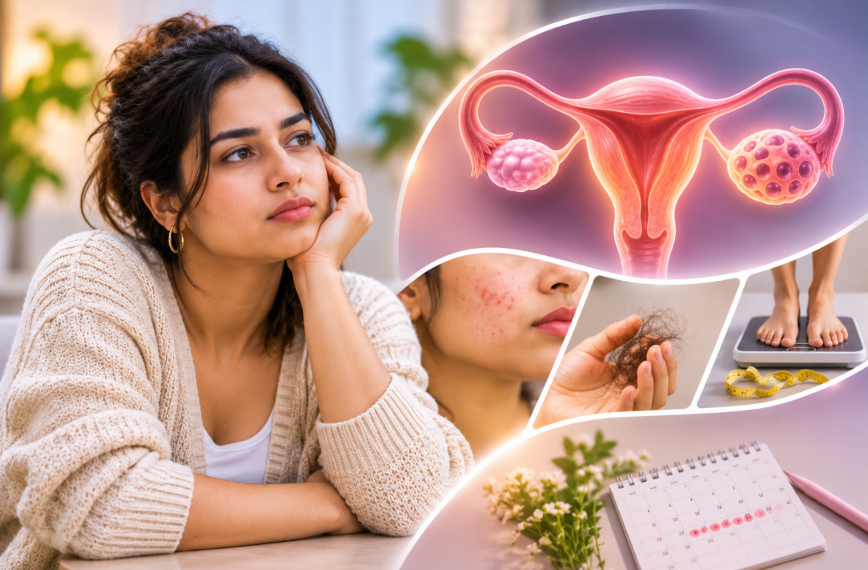
PCOS does not look the same in everyone. Common signs include:
- Irregular, delayed or absent periods, often fewer than eight cycles a year
- Acne, especially along the jaw and chin, that continues past the teenage years
- Excess hair on the face, chest, abdomen or back
- Thinning hair on the scalp
- Weight gain, particularly around the waist, or difficulty losing weight
- Dark, velvety patches of skin on the neck, underarms or groin
- Difficulty conceiving
- Mood changes, low energy and disturbed sleep
A woman can have PCOS without being overweight. Lean PCOS is common, and it is often missed because people assume the condition only affects those who weigh more.
Why it happens
The exact cause is not fully known. Several things seem to work together. Many women with PCOS have insulin resistance, which means the body needs to produce more insulin to control blood sugar. High insulin levels push the ovaries to make more male-type hormones (androgens), which interfere with ovulation. Genes play a role, and PCOS often runs in families. Lifestyle factors, such as weight gain, a sedentary routine and chronic stress, can make it worse.
How PCOS is diagnosed
An ultrasound that shows “polycystic ovaries” is not, by itself, a diagnosis. Many healthy women have ovaries with that appearance, and some women with PCOS have normal-looking ovaries. Doctors generally diagnose PCOS when at least two of these three features are present, after other causes have been ruled out:
- Irregular or absent ovulation, shown by irregular periods
- Signs of high androgens, such as acne and excess hair, or raised levels on a blood test
- Polycystic-appearing ovaries on ultrasound
Because thyroid disease, high prolactin and a few other conditions can look similar, I usually advise some tests along with the examination:
- Hormone tests, such as thyroid function (TSH), prolactin, and, depending on the picture, testosterone, FSH and LH
- Blood sugar and insulin assessment, including fasting glucose or HbA1c, and sometimes a glucose tolerance test
- Cholesterol and lipid profile
- Ultrasound of the pelvis, which may be done through the abdomen for women who are not sexually active
If you have already read my guide on PCOS treatment in Faridabad, this section shows how the diagnosis is made. If your main concern is periods, see PCOS and irregular periods: 10 questions answered.
Why PCOS needs treatment, not just tolerance
PCOS is not only about periods. Over the years, it increases the chances of:
- Type 2 diabetes and pre-diabetes
- High cholesterol and high blood pressure
- Fatty liver
- Sleep apnoea
- Thickening of the uterine lining, because infrequent periods can let it build up without being shed, which in some women can lead to abnormal changes later
- Anxiety and depression
The good news is that early diagnosis and steady management reduce these risks considerably.
Treatment: what actually works
There is no single “cure” for PCOS, but nearly all of its effects can be controlled. The plan depends on your symptoms and whether you want to conceive.
Lifestyle first. Even a loss of five to ten per cent of body weight can restore ovulation in many women who are overweight. I recommend regular meals with more protein, vegetables and whole grains and fewer refined carbohydrates and sugary drinks, plus around 150 minutes of exercise a week, mixing walking or cycling with strength training. I discuss why the scale is so stubborn in PCOS and weight gain: why losing weight feels impossible and what actually works, and why habits matter more than pills in Your hormones don’t need more pills, they need better habits.
Medicines to regulate periods and symptoms. Combined hormonal pills or progestin courses can regulate cycles and protect the uterine lining, and they often improve acne and hair growth. If there is insulin resistance, metformin may be added. For stubborn unwanted hair or hair loss, anti-androgen medicines can be used under supervision, with reliable contraception.
Help to conceive. If you are trying for a baby, ovulation can usually be induced with tablets such as letrozole, with monitoring through scans. Other options exist if these do not work. More on this in Can PCOS affect fertility? and my guide to infertility tests for women.
Supplements. Some women take inositol, vitamin D or other supplements. Evidence is mixed, so please discuss them with your doctor instead of buying them online.
Myths I hear every week
“PCOS means I cannot have a baby.” Many women with PCOS conceive naturally or with simple treatment.
“It will go away after marriage or after one pregnancy.” It may improve, but it can return. Periods and weight need lifelong attention.
“Only overweight women get PCOS.” Lean women can have it too.
“Birth control pills cure PCOS.” They control symptoms while you take them. They do not fix the underlying cause.
“I should skip carbohydrates completely.” Extreme diets backfire. Balanced, lower-glycaemic eating works better and lasts longer.
When to see a gynecologist
See a doctor if your periods are irregular for more than three months, you have gone more than two months without a period, acne or hair growth is worsening, you are gaining weight without explanation, or you have been trying to conceive for a year (or six months if you are over 35). Teenagers with irregular periods that persist two years after the first period should also be checked.
PCOS does not replace routine care. Women with PCOS still need regular check-ups and cervical screening, which I explain in HPV vaccine and cervical cancer screening: what women should know. If you also notice unusual vaginal discharge, read white discharge: normal vs abnormal. And if period pain is your main complaint, see painful periods: causes and when to see a gynecologist, because PCOS is not usually the cause of severe cramps.
You can book an appointment here. Our menstrual disorders page has more on what we treat.
This article is for general awareness and does not replace a personal medical consultation.