PCOS or PCOD? Symptoms, Diagnosis and Treatment Guide

“Doctor, is it PCOS or PCOD? My friend says they are different.” This is one of the questions I am asked most often by young women who have just seen the words on an ultrasound report. Many arrive anxious, having already read that PCOS means they will never conceive or will gain weight no matter what they do. Neither is true.

Let me explain what these terms mean, how the condition is really diagnosed, and what can be done about it.

PCOS vs PCOD: is there a difference?

In everyday talk in India, PCOD (polycystic ovarian disease) usually means ovaries that contain many small, immature follicles along with some hormonal disturbance. PCOS (polycystic ovary syndrome) is the term doctors use for the full condition, which involves the hormones, the metabolism and the ovaries together. Some people describe PCOD as the milder form and PCOS as the more serious one.

In clinical practice, the two names are mostly used for the same problem, and what matters is not the label but the pattern in each woman: whether she ovulates regularly, whether her male-type hormones are high, and whether her body is resistant to insulin. That pattern decides the treatment.

How common is it?

PCOS is one of the most common hormonal conditions in women of reproductive age. Estimates for India vary widely between studies, but it affects a large number of women, many of whom have never been diagnosed. It often begins in the teenage years, although it may only be noticed when periods become irregular, weight rises, or pregnancy does not happen.

Symptoms to look out for

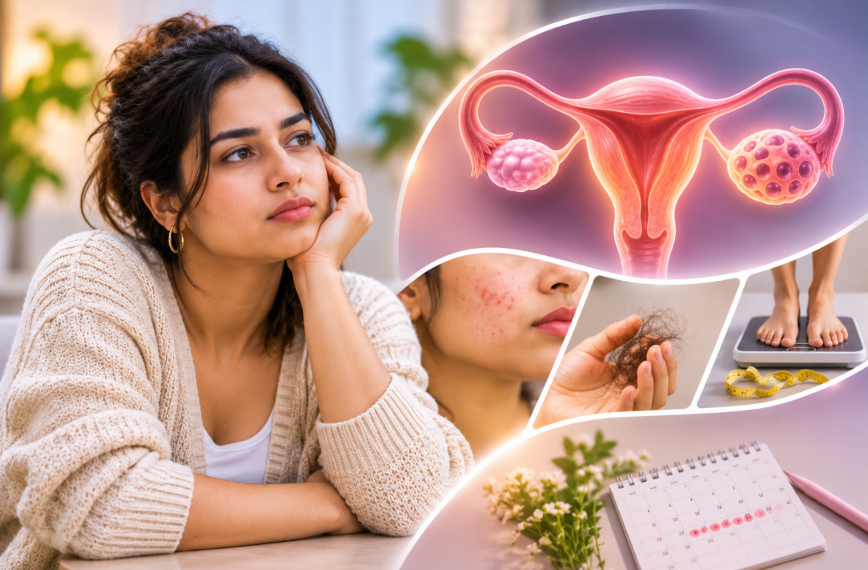
PCOS does not look the same in everyone. Common signs include:

  • Irregular, delayed or absent periods, often fewer than eight cycles a year
  • Acne, especially along the jaw and chin, that continues past the teenage years
  • Excess hair on the face, chest, abdomen or back
  • Thinning hair on the scalp
  • Weight gain, particularly around the waist, or difficulty losing weight
  • Dark, velvety patches of skin on the neck, underarms or groin
  • Difficulty conceiving
  • Mood changes, low energy and disturbed sleep

A woman can have PCOS without being overweight. Lean PCOS is common, and it is often missed because people assume the condition only affects those who weigh more.

Why it happens

The exact cause is not fully known. Several things seem to work together. Many women with PCOS have insulin resistance, which means the body needs to produce more insulin to control blood sugar. High insulin levels push the ovaries to make more male-type hormones (androgens), which interfere with ovulation. Genes play a role, and PCOS often runs in families. Lifestyle factors, such as weight gain, a sedentary routine and chronic stress, can make it worse.

How PCOS is diagnosed

An ultrasound that shows “polycystic ovaries” is not, by itself, a diagnosis. Many healthy women have ovaries with that appearance, and some women with PCOS have normal-looking ovaries. Doctors generally diagnose PCOS when at least two of these three features are present, after other causes have been ruled out:

  1. Irregular or absent ovulation, shown by irregular periods
  2. Signs of high androgens, such as acne and excess hair, or raised levels on a blood test
  3. Polycystic-appearing ovaries on ultrasound

Because thyroid disease, high prolactin and a few other conditions can look similar, I usually advise some tests along with the examination:

  • Hormone tests, such as thyroid function (TSH), prolactin, and, depending on the picture, testosterone, FSH and LH
  • Blood sugar and insulin assessment, including fasting glucose or HbA1c, and sometimes a glucose tolerance test
  • Cholesterol and lipid profile
  • Ultrasound of the pelvis, which may be done through the abdomen for women who are not sexually active

If you have already read my guide on PCOS treatment in Faridabad, this section shows how the diagnosis is made. If your main concern is periods, see PCOS and irregular periods: 10 questions answered.

Why PCOS needs treatment, not just tolerance

PCOS is not only about periods. Over the years, it increases the chances of:

  • Type 2 diabetes and pre-diabetes
  • High cholesterol and high blood pressure
  • Fatty liver
  • Sleep apnoea
  • Thickening of the uterine lining, because infrequent periods can let it build up without being shed, which in some women can lead to abnormal changes later
  • Anxiety and depression

The good news is that early diagnosis and steady management reduce these risks considerably.

Treatment: what actually works

There is no single “cure” for PCOS, but nearly all of its effects can be controlled. The plan depends on your symptoms and whether you want to conceive.

Lifestyle first. Even a loss of five to ten per cent of body weight can restore ovulation in many women who are overweight. I recommend regular meals with more protein, vegetables and whole grains and fewer refined carbohydrates and sugary drinks, plus around 150 minutes of exercise a week, mixing walking or cycling with strength training. I discuss why the scale is so stubborn in PCOS and weight gain: why losing weight feels impossible and what actually works, and why habits matter more than pills in Your hormones don’t need more pills, they need better habits.

Medicines to regulate periods and symptoms. Combined hormonal pills or progestin courses can regulate cycles and protect the uterine lining, and they often improve acne and hair growth. If there is insulin resistance, metformin may be added. For stubborn unwanted hair or hair loss, anti-androgen medicines can be used under supervision, with reliable contraception.

Help to conceive. If you are trying for a baby, ovulation can usually be induced with tablets such as letrozole, with monitoring through scans. Other options exist if these do not work. More on this in Can PCOS affect fertility? and my guide to infertility tests for women.

Supplements. Some women take inositol, vitamin D or other supplements. Evidence is mixed, so please discuss them with your doctor instead of buying them online.

Myths I hear every week

“PCOS means I cannot have a baby.” Many women with PCOS conceive naturally or with simple treatment.

“It will go away after marriage or after one pregnancy.” It may improve, but it can return. Periods and weight need lifelong attention.

“Only overweight women get PCOS.” Lean women can have it too.

“Birth control pills cure PCOS.” They control symptoms while you take them. They do not fix the underlying cause.

“I should skip carbohydrates completely.” Extreme diets backfire. Balanced, lower-glycaemic eating works better and lasts longer.

When to see a gynecologist

See a doctor if your periods are irregular for more than three months, you have gone more than two months without a period, acne or hair growth is worsening, you are gaining weight without explanation, or you have been trying to conceive for a year (or six months if you are over 35). Teenagers with irregular periods that persist two years after the first period should also be checked.

PCOS does not replace routine care. Women with PCOS still need regular check-ups and cervical screening, which I explain in HPV vaccine and cervical cancer screening: what women should know. If you also notice unusual vaginal discharge, read white discharge: normal vs abnormal. And if period pain is your main complaint, see painful periods: causes and when to see a gynecologist, because PCOS is not usually the cause of severe cramps.

You can book an appointment here. Our menstrual disorders page has more on what we treat.

This article is for general awareness and does not replace a personal medical consultation.

Your Hormones Don’t Need More Pills — They Need Better Habits

A gynecologist’s perspective on healing hormonal imbalances naturally through lifestyle, sleep, nutrition, and stress management. Every day, women walk into Dr Shweta Mendiratta’s clinic in Faridabad carrying a list of symptoms they have quietly tolerated for years — unexplained weight gain, irregular periods, relentless fatigue, mood swings, hair thinning, and sleepless nights. Their first question is almost always the same: “Doctor, do I need hormonal pills?” 

My honest answer surprises many of them: not always. And sometimes, not at all.

As a gynecologist with years of experience treating women across all age groups, I have come to one firm belief: your hormones are not broken — they are responding. They are reacting to what you eat, how you sleep, how much you move, and how well you manage stress. Before we reach for the prescription pad, we need to look seriously at your daily habits. Because in most cases, habits are where real hormonal healing begins.

The Hormone Crisis No One Is Talking About

India is witnessing a quiet epidemic of hormonal disorders in women. Polycystic Ovarian Syndrome (PCOS) now affects a significant proportion of women of reproductive age. Thyroid dysfunction, particularly hypothyroidism, is rising rapidly among Indian women. Perimenopause and menopause are causing debilitating symptoms that go under-treated. And yet, the reflex response is almost always the same: prescribe the pill, start hormone replacement, add another medication.

That approach has its place. There are conditions where medical intervention is absolutely necessary and life changing. But there is a large grey zone — a population of women whose hormonal symptoms are primarily driven by lifestyle factors — where a different kind of medicine is needed first. The medicine of habits.

Why Hormones Respond to Lifestyle More Than You Think

Hormones do not function in isolation. They are chemical messengers that are profoundly sensitive to everything happening inside and around your body. Insulin levels are directly impacted by what you eat. Cortisol, the stress hormone, spikes with poor sleep and chronic anxiety. Estrogen metabolism is influenced by gut health and body weight. Thyroid function can be disrupted by nutritional deficiencies and environmental toxins.

When you look at hormonal imbalance through this lens, it becomes clear that pills alone cannot fix what lifestyle keeps breaking. You cannot out-medicate a body that is not sleeping enough, eating poorly, moving too little, and living under constant stress. The hormonal system is deeply interconnected — pulling one lever shifts many others. This is why a holistic, habit-based approach is not a soft alternative to medicine; it is, in many cases, the most scientifically sound place to start.

The Five Habits That Heal Hormones

  1. Sleep: The Most Underestimated Hormonal Intervention

I tell my patients this repeatedly: if you are sleeping less than seven hours a night, no supplement or medication will fully compensate for that loss. Sleep is when your body resets its entire hormonal orchestra. Growth hormone is primarily secreted during deep sleep. Cortisol follows a circadian rhythm that is anchored to your sleep-wake cycle. Ghrelin and leptin — the hormones that regulate hunger and fullness — are directly disrupted by inadequate sleep, which is why poor sleep almost always drives overeating and weight gain.

Women with PCOS are twice as likely to suffer from sleep disturbances. Addressing sleep quality is often the first and most impactful intervention I recommend. Simple steps — a consistent sleep time, reducing screen exposure before bed, keeping the bedroom cool and dark — can initiate measurable shifts in hormonal balance within weeks.

  1. Nutrition: Feed Your Hormones, Not Just Your Hunger

The food choices Indian women make daily have an enormous bearing on their hormonal health. Ultra-processed foods, refined carbohydrates, excess sugar, and trans fats all promote inflammation and insulin resistance — two of the biggest drivers of hormonal disruption.

What works well for hormonal balance is a diet rich in whole foods: vegetables, legumes, whole grains, nuts, seeds, lean proteins, and healthy fats. I often guide patients toward a Mediterranean-style approach adapted to Indian food culture — emphasizing dal, sabzi, whole grains like bajra and jowar, curd, and good fats from nuts and mustard oil. Cruciferous vegetables like broccoli, cauliflower, and cabbage are particularly valuable as they support estrogen clearance in the liver.

Blood sugar stability is central to hormonal health. Eating at regular intervals, never skipping breakfast, including protein and fibre in every meal, and avoiding refined sugar spikes will do more for insulin regulation than most supplements.

  1. Exercise: Move Smarter, Not Just Harder

Movement is medicine for the endocrine system. Regular physical activity improves insulin sensitivity, reduces cortisol, boosts mood-regulating neurotransmitters, and supports healthy body weight — all of which feedback positively into hormonal balance.

However, more is not always better. Overtraining, particularly intense cardio performed daily, can elevate cortisol and worsen hormonal disruption in women with underlying imbalances. I recommend a balanced approach: strength training two to three times a week (which dramatically improves insulin function), combined with gentle daily movement like walking or yoga. Even a 30-minute brisk walk after dinner has a measurable impact on blood sugar and sleep quality.

For women with PCOS, resistance training is particularly transformative. It improves the body’s sensitivity to insulin, which in turn lowers androgens and can restore menstrual regularity — often without medication.

  1. Stress Management: The Cortisol Connection

Chronic stress is one of the most insidious disruptors of women’s hormonal health, and it is profoundly underestimated. When stress is sustained, the body keeps pumping cortisol — and chronically elevated cortisol interferes with reproductive hormones, disrupts ovulation, worsens thyroid function, drives cravings for sugary foods, promotes belly fat, and impairs sleep.

The women I see most commonly in my clinic — working professionals, young mothers, women juggling multiple caregiving roles — are living with extraordinary stress loads that are written all over their hormonal profiles. Managing stress is not a luxury; it is a medical necessity.

Evidence-based practices that genuinely lower cortisol include mindfulness meditation, breathwork, spending time in nature, yoga, journaling, and simply creating daily spaces for rest and transition. Even ten minutes of conscious breathing daily can produce measurable reductions in cortisol over time.

  1. Gut Health: The Forgotten Hormone Regulator

The gut microbiome plays a significant and often overlooked role in hormonal balance. The estrobolome — the collection of gut bacteria responsible for metabolising estrogen — directly influences how estrogen is processed and eliminated from the body. An unhealthy gut can lead to estrogen being reabsorbed rather than excreted, driving conditions like estrogen dominance, endometriosis, and fibroids.

Supporting gut health through a high-fibre diet, fermented foods like curd and kanji, adequate hydration, and avoiding unnecessary antibiotics is a meaningful strategy for hormonal wellbeing that rarely receives the attention it deserves.

When Medication Is Necessary

I want to be clear: this is not an anti-medication message. There are conditions — severe thyroid dysfunction, premature ovarian insufficiency, significant PCOS complications, perimenopause symptoms impacting quality of life — where medical or hormonal therapy is not just appropriate but essential. I prescribe when I need to, and I do so without hesitation.

What I advocate for is a thoughtful sequencing of care. In many women with early or moderate hormonal imbalance, lifestyle interventions implemented with commitment and consistency will produce profound results — often within three to six months. When we start there, we frequently find that either medication is no longer needed, or if it is, it works far better alongside a healthy foundation.

A Message to the Women of Faridabad

The women I serve deserve more than a quick prescription. They deserve to understand their bodies, to know what is driving their symptoms, and to feel empowered to make changes that will serve them for a lifetime. Hormonal health is not a mystery to be solved only in a clinic — it is built in your kitchen, your bedroom, your movement, and your relationship with stress.

Your body is not failing you. It is communicating with you. Let us learn to listen together.

— Dr. Shweta Mendiratta, Gynecologist in Faridabad

Frequently Asked Questions (FAQs)

Q1. Can lifestyle changes really fix hormonal imbalances, or do I always need medication?

In many cases, yes — lifestyle changes alone can significantly improve or even resolve hormonal imbalances, particularly in the early and moderate stages. Conditions like mild to moderate PCOS, insulin resistance, thyroid dysfunction related to nutritional deficiencies, and stress-related hormonal disruption respond very well to consistent improvements in diet, sleep, exercise, and stress management. However, some conditions require medical treatment, and it is important to consult a gynecologist for a proper diagnosis before deciding on a course of action.

Q2. How long does it take for lifestyle changes to show results in hormonal health?

Most women begin to notice improvements in energy, mood, and sleep within four to six weeks of making meaningful lifestyle changes. Menstrual cycle regularity and hormonal blood markers may take three to six months to show measurable improvement. The key is consistency — small, sustained changes produce better results than dramatic short-term efforts.

Q3. I have PCOS. Should I take the contraceptive pill or try lifestyle changes first?

This depends on the severity of your symptoms and your personal health goals. For women with mild to moderate PCOS who are not seeking immediate fertility treatment, a structured lifestyle programme — focusing on diet, exercise, sleep, and stress management — is a highly effective first-line approach and is recommended by many guidelines. For women with more severe symptoms, hormonal medications may be needed alongside lifestyle changes. Always discuss your options with your gynecologist, who can tailor a plan to your specific situation.

Q4. What foods should I avoid if I have hormonal imbalance?

The most important foods to reduce or eliminate are: refined sugars and processed carbohydrates (maida, white rice in excess, packaged snacks), trans fats (found in most fried and packaged foods), excess caffeine, and alcohol. These foods promote inflammation and insulin resistance, both of which are major drivers of hormonal disruption. Replacing these with whole grains, vegetables, legumes, nuts, seeds, and lean proteins will make a noticeable difference.

Q5. Can stress really cause irregular periods?

Absolutely. Chronic stress elevates cortisol, which interferes directly with the hypothalamic-pituitary-ovarian axis — the hormonal communication system that governs the menstrual cycle. High cortisol can suppress the release of GnRH, LH, and FSH, leading to delayed or missed ovulation and consequently irregular or absent periods. This is why women under prolonged stress frequently report menstrual irregularities even without any underlying reproductive disorder.

Q6. Is it true that poor sleep can cause weight gain related to hormones?

Yes. Poor sleep disrupts two key hunger-regulating hormones: ghrelin (which stimulates appetite) rises, and leptin (which signals fullness) falls. This makes you feel hungrier and less satisfied after eating, leading to caloric excess. Poor sleep also elevates cortisol, which promotes fat storage particularly around the abdomen. Prioritising seven to eight hours of quality sleep is one of the most effective things you can do for weight management and hormonal balance.

Q7. I am approaching menopause. Can lifestyle changes help with menopausal symptoms?

Yes, significantly. Regular exercise — particularly strength training — reduces the frequency and severity of hot flushes and supports bone density. A Mediterranean-style diet reduces inflammation and supports cardiovascular health, which becomes particularly important post-menopause. Stress management techniques like yoga and mindfulness have been shown to reduce hot flush severity. For women with severe symptoms, hormone replacement therapy remains an effective option and can be discussed with your gynecologist.

Q8. When should I see a gynecologist rather than just trying lifestyle changes?

You should consult a gynecologist if you experience: periods that are absent for more than three months without pregnancy, very heavy or prolonged bleeding, sudden or severe weight changes, symptoms suggestive of thyroid disease, difficulty conceiving, severe PMS or mood disturbances, or any symptoms that are significantly impacting your quality of life. A proper hormonal evaluation through blood tests will give you and your doctor the information needed to make the best decision for your care.