
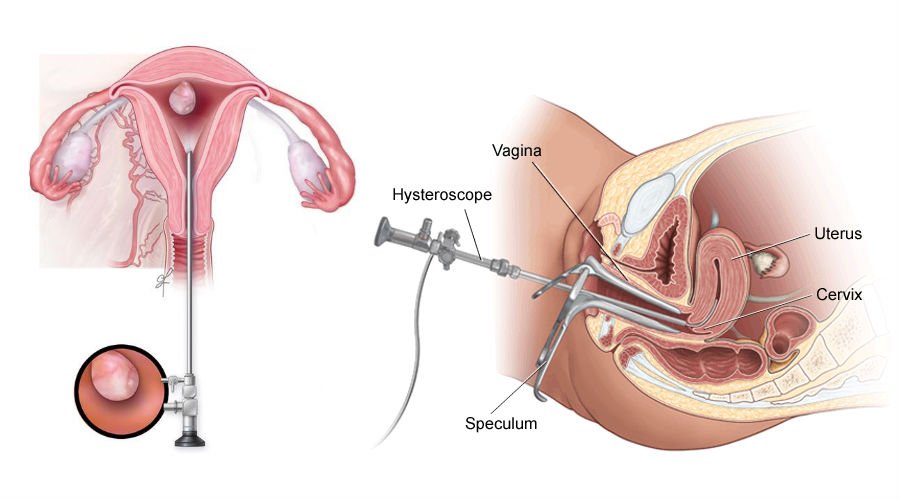
When a couple is struggling to conceive, they often focus on sperm counts, egg reserves, and fallopian tubes — and rightly so. But one crucial factor that is frequently overlooked is the condition of the uterine cavity itself. A uterus that looks perfectly normal on an external ultrasound can harbour polyps, fibroids, adhesions, or a septum that makes implantation impossible — problems that only hysteroscopy can detect and treat. Dr. Shweta Mendiratta, specialist gynaecologist in Faridabad, explains why hysteroscopy should be part of every couple’s infertility workup.
What Is Hysteroscopy?
Hysteroscopy is a minimally invasive procedure in which a thin, lighted telescope (hysteroscope) is inserted through the cervix into the uterine cavity. It allows the gynaecologist to directly visualise the inside of the uterus — identifying abnormalities that cannot be seen on an ultrasound or MRI.
There are two types: diagnostic hysteroscopy (examination only) and operative hysteroscopy (examination plus treatment during the same procedure). In experienced hands, both can often be performed in an outpatient setting with minimal anaesthesia.
Why Is the Uterine Cavity So Important for Fertility?
For a pregnancy to succeed, a fertilised embryo must implant into a healthy, receptive uterine lining. Any abnormality that distorts the cavity, disrupts the lining, or alters the uterine environment can prevent implantation — even in women with excellent eggs and a clear embryo transfer on IVF. Studies show that correcting uterine abnormalities before IVF improves pregnancy rates significantly.
What Conditions Can Hysteroscopy Detect and Treat?
- Uterine Polyps
Endometrial polyps are small, finger-like growths on the uterine lining. They are found in approximately 10–24% of infertile women and may impair implantation by acting as a ‘foreign body’ or by altering the uterine environment. Hysteroscopic polypectomy (removal of polyps through the hysteroscope) is a simple, highly effective procedure that significantly improves pregnancy rates.
- Submucosal Fibroids
Fibroids that protrude into the uterine cavity (submucosal fibroids) have the greatest impact on fertility. They distort the cavity, impair implantation, and may impede blood flow to the developing embryo. Hysteroscopic myomectomy removes them without any external incisions.
- Intrauterine Adhesions (Asherman’s Syndrome)
Scar tissue within the uterine cavity can form after uterine infections, excessive curettage (D&C), or other uterine procedures. This condition, known as Asherman’s syndrome, can cause amenorrhoea, recurrent miscarriage, and infertility. Hysteroscopic adhesiolysis (cutting of adhesions) can restore normal anatomy and dramatically improve outcomes.
- Uterine Septum
A uterine septum is a band of tissue that divides the uterine cavity. It is the most common uterine anomaly and is strongly associated with recurrent miscarriage (loss rates as high as 60–80%). Hysteroscopic metroplasty (septal incision) is a straightforward procedure that dramatically reduces miscarriage risk.
- Endometrial Hyperplasia
Thickening of the uterine lining can be identified and biopsied during hysteroscopy, allowing early detection and treatment of precancerous changes before they progress.
Who Should Have a Hysteroscopy?
- Women with unexplained infertility (after basic tests are normal)
- Women planning IVF, especially after a failed cycle
- Women with recurrent miscarriage
- Women with suspected fibroids, polyps, or uterine anomalies on ultrasound
- Women with heavy or irregular periods
- Women before fertility-preserving surgery or uterine reconstruction
What to Expect During the Procedure
In most cases, diagnostic hysteroscopy can be performed in an outpatient setting with local anaesthesia or light sedation. The procedure typically takes 10–30 minutes. Operative hysteroscopy may require general or regional anaesthesia depending on the complexity of the procedure.
After hysteroscopy, most women experience mild cramping and light spotting for a day or two. Recovery is rapid — most women return to normal activity within 24–48 hours.
Hysteroscopy Cost in India and Faridabad
The cost of hysteroscopy in India varies significantly depending on the type of procedure (diagnostic vs operative), the hospital, and any additional procedures performed simultaneously. Diagnostic hysteroscopy is considerably less expensive than operative procedures involving removal of fibroids or adhesions. Dr. Mendiratta’s team can provide a detailed cost estimate after evaluating your specific needs.
Frequently Asked Questions (FAQs)
Q1. Is hysteroscopy painful?
Diagnostic hysteroscopy is generally well tolerated with mild local anaesthesia. Operative procedures may require light general anaesthesia. Post-procedure cramping is typically mild and short-lived.
Q2. How soon after hysteroscopy can I try to conceive?
After simple diagnostic hysteroscopy or polypectomy, most doctors advise waiting one menstrual cycle before attempting to conceive. After adhesiolysis or septum resection, a longer period of healing (3–6 months) may be recommended.
Q3. Does hysteroscopy improve IVF success rates?
Yes — multiple studies show that hysteroscopy before IVF (particularly after a failed cycle) improves pregnancy and live birth rates. It ensures the cavity is optimally prepared for embryo transfer.
Q4. Can hysteroscopy be done during menstruation?
Hysteroscopy is generally performed in the first half of the cycle (days 6–12) when the uterine lining is thin, providing the best visualisation. It is not typically performed during active menstruation.
Q5. How is hysteroscopy different from a D&C?
A D&C (dilation and curettage) is performed ‘blind’ — the surgeon cannot see inside the cavity. Hysteroscopy allows direct visualisation, making it far more accurate for diagnosing and treating intrauterine problems.
Get In Touch With Dr. Shweta Mendiratta
Phone: +91-8130048652 | +91-9999093503
Email: shwetasmendiratta@gmail.com
Yatharth Super Speciality Hospital
Plot No 9, Sector-20, Krishna Nagar, New Industrial Township, Faridabad, Haryana 121007
Phone: +91 8178-939442
Mediclub Gynae ‘N’ Neuro Clinic
Pilot No. 857 Sector 21 C, Faridabad Delhi, Haryana 121001