
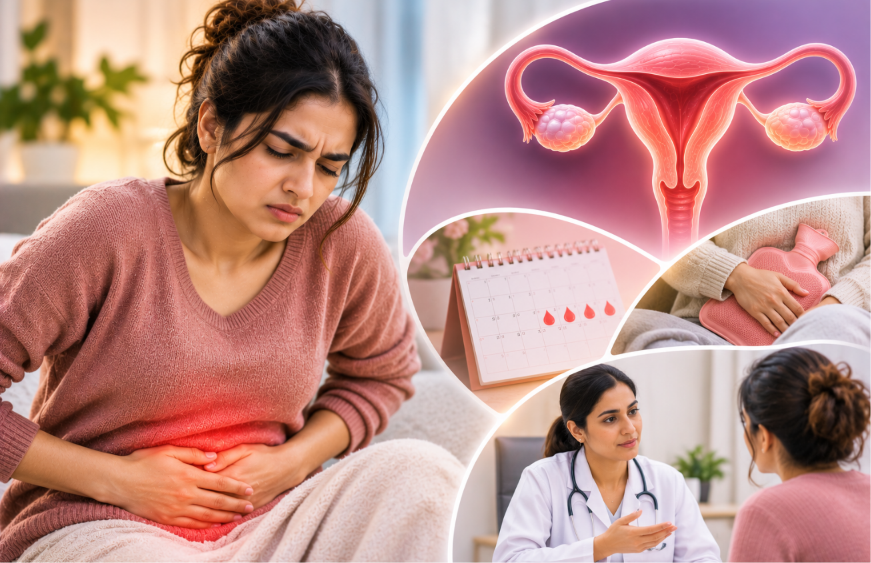
For many women, a few days of cramps every month feel like a fact of life. Mothers say it, friends say it, and a hot water bag and a painkiller become part of the routine. But there is a difference between cramps that are uncomfortable and pain that stops you from going to work, college or even getting out of bed.
In my clinic I meet women who have put up with severe period pain for ten or fifteen years before finding out that there was a treatable reason behind it. This article explains what is normal, what is not, and when to seek help.
Why periods hurt
During your period, the lining of the uterus is shed. The uterus contracts to push it out, helped by chemicals called prostaglandins. Higher levels of prostaglandins mean stronger contractions and more pain. The cramps are felt in the lower abdomen and can spread to the back and thighs. Some women also get nausea, loose stools, headache or fatigue.
The medical term for painful periods is dysmenorrhoea. It comes in two types.
Primary dysmenorrhoea: pain without an underlying disease
This is the common type. It usually begins within a year or two of a girl’s first period, starts a day or so before the bleeding or when it begins, and lasts for one to three days. The pelvis is normal on examination and scans. The pain tends to ease with age, and often after a pregnancy, and it usually responds well to simple treatment.
Secondary dysmenorrhoea: pain caused by another condition
This type starts later, often in the twenties or thirties, or it changes from what was previously manageable. Causes include:
- Endometriosis, where tissue like the uterine lining grows outside the uterus. It often causes pain before and during periods, pain during sex, and trouble conceiving. See endometriosis symptoms that women in India are ignoring.
- Adenomyosis, where the lining grows into the muscle wall of the uterus, causing heavy, painful periods and an enlarged, tender uterus. I explain the difference in adenomyosis vs endometriosis.
- Fibroids, non-cancerous growths in the uterus that can cause heavy bleeding, pressure and pain. Read more on our fibroids page.
- Pelvic infection (pelvic inflammatory disease), often with fever, foul-smelling discharge and pain during sex
- Ovarian cysts, which can cause one-sided pain
- A copper intrauterine device, which can increase cramps and bleeding in some women
Normal cramps or a warning sign?
| Usually normal | Worth getting checked |
|---|---|
| Pain starts around the first day of the period and eases in 2 to 3 days | Pain begins days before the period or lasts through most of it |
| Settles with a hot water bag or one or two painkillers | Painkillers barely help or you need them every cycle in high doses |
| Has been much the same since your teens | Is getting worse over months or years, or started after 25 |
| Does not stop you from daily activities | Makes you miss school, work or sleep |
| Periods are of normal flow | Bleeding is very heavy, with large clots, or between periods |
| No pain at other times | Pain during sex, while passing stools or urine, or at other times of the month |
Warning signs that should not wait
Please see a gynecologist soon if you have:
- Severe pain that does not improve with medicines
- Pain that is new, or much worse than before
- Heavy bleeding that soaks a pad every one to two hours, or contains large clots
- Fever with lower abdominal pain, or a foul-smelling vaginal discharge. My article on white discharge: normal vs abnormal explains when discharge needs treatment
- Bleeding after sex or between periods
- Pain during intercourse
- Difficulty conceiving after a year of trying
- Fainting, dizziness or paleness, which may suggest anaemia from heavy blood loss
If the pain is sudden, severe and one-sided, especially with vomiting or fainting, go to an emergency department, because it can be an ovarian cyst twisting or an ectopic pregnancy.
How we find the cause
I start by listening. When did the pain start, how severe is it, what helps, and how are your cycles? A pelvic ultrasound is usually the first test. It can show fibroids, cysts and signs of adenomyosis. If endometriosis is suspected and the ultrasound is not enough, an MRI or a keyhole look (laparoscopy) may be advised. Blood tests may be done for anaemia and infection. A normal scan does not always rule out endometriosis, which is one reason why many women wait years for a diagnosis. For a young woman, we also think about the whole menstrual picture, including whether cycles are regular. If they are not, PCOS or PCOD may be part of the story.
Treatment options
Self-care. A hot water bag on the lower abdomen, gentle walking or yoga, enough sleep and avoiding smoking can all ease cramps. Some women find that cutting down caffeine and salty foods helps.
Pain relief the right way. Anti-inflammatory medicines such as mefenamic acid or ibuprofen work best when taken at the first sign of pain, with food, and for the shortest time needed. They are not suitable for everyone, for example people with stomach ulcers, kidney problems or asthma triggered by painkillers, so please check with your doctor before using them regularly.
Hormonal treatment. Combined contraceptive pills, progestin tablets or a hormone-releasing intrauterine system reduce the lining and prostaglandins, so periods become lighter and less painful. They are also useful in endometriosis and adenomyosis.
Treating the cause. Fibroids, cysts and endometriosis may need medicines or minimally invasive surgery. Where an operation is needed, I prefer keyhole techniques, which mean smaller cuts and quicker recovery. You can read about our laparoscopy services.
Fertility planning. If you have endometriosis or adenomyosis and want a baby, timing and treatment need to be planned carefully. See infertility tests for women: what to expect at your first visit.
Myths about period pain
“Painful periods are normal, every woman has them.” Mild cramps are normal. Severe pain is not, and it should be assessed.
“The pain will go away after marriage or after a baby.” It may ease in primary dysmenorrhoea, but conditions like endometriosis do not disappear on their own.
“Taking painkillers during periods is harmful.” Occasional use at the right dose is safe for most women. Using them heavily every month without finding the cause is the real problem.
“Period pain is a teenage problem.” Pain that begins in your late twenties or thirties usually has a cause.
Teenagers and period pain
Teen girls are often told to ignore cramps. A gentle approach works best: reassurance, heat, simple medicines, and a check-up if the pain is stopping school or is not improving. You may find my articles on irregular periods in teens and menstrual hygiene helpful. If bleeding is also very heavy or irregular, see heavy periods: when is it normal and irregular periods: when to see a gynecologist.
When to see a gynecologist
Book a visit if your period pain is getting worse, keeps you from your normal life, does not respond to simple medicines, or comes with any warning sign above. If you are sexually active and have not had a Pap smear or HPV test, this is also a good time to ask about screening, which I describe in HPV vaccine and cervical cancer screening. You can book an appointment here.
This article is for general awareness and does not replace a personal medical consultation.