
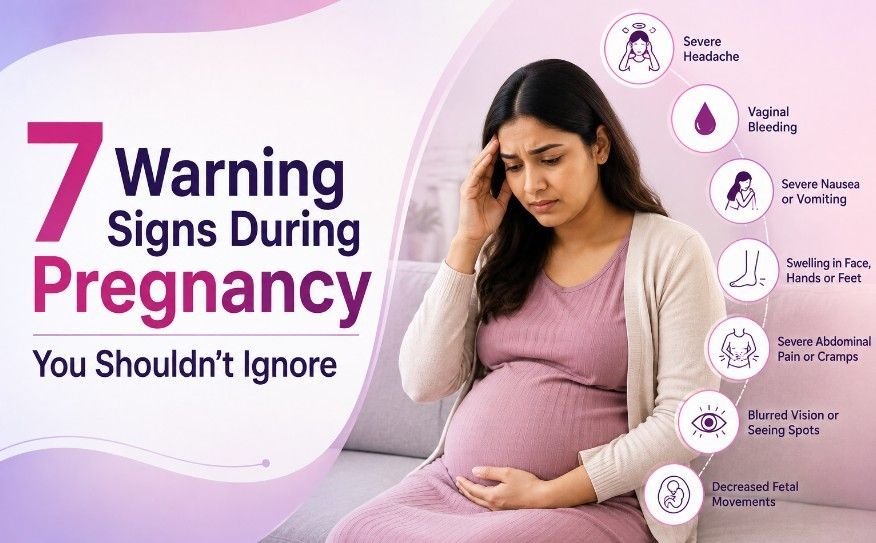
Pregnancy brings a wide range of physical changes, and it’s not always easy to distinguish between normal discomfort and a sign that something may be wrong. While many symptoms during pregnancy are harmless, certain warning signs require immediate medical attention. As a trusted gynecologist in Faridabad, Dr. Shweta Mendiratta emphasizes that early recognition of these signs can make a critical difference in outcomes for both mother and baby.
Here are seven warning signs during pregnancy that should never be ignored.
- Vaginal Bleeding
While light spotting can sometimes occur, especially in early pregnancy, any significant vaginal bleeding should be evaluated promptly. Bleeding can be a sign of several conditions depending on the stage of pregnancy:
- First trimester: Could indicate miscarriage or ectopic pregnancy
- Second trimester: May signal placental issues or cervical insufficiency
- Third trimester: Could indicate placenta previa or placental abruption, both of which are medical emergencies
If you experience bleeding accompanied by pain, cramping, or clots, contact your gynecologist immediately rather than waiting to see if it resolves on its own.
- Severe or Persistent Headaches
Occasional mild headaches are common during pregnancy due to hormonal changes. However, severe, persistent headaches — especially in the second or third trimester — can be an early sign of preeclampsia, a serious condition involving high blood pressure that can affect both mother and baby if left untreated.
Headaches accompanied by visual disturbances, swelling, or upper abdominal pain should be treated as urgent and require immediate evaluation.
- Sudden Swelling in Face, Hands, or Feet
Some swelling in the feet and ankles is normal during pregnancy, particularly in the third trimester. However, sudden or severe swelling, especially in the face and hands, combined with rapid weight gain, can be another warning sign of preeclampsia.
This condition can develop quickly, so any sudden change in swelling patterns should be reported to your doctor without delay.
- Reduced or Absent Fetal Movement
By around 28 weeks, most women develop a sense of their baby’s regular movement patterns. A noticeable decrease in fetal movement, or the complete absence of movement over several hours, can indicate fetal distress and needs immediate medical evaluation.
Doctors often recommend “kick counts” during the third trimester — tracking fetal movements over a set period — to help identify any concerning changes early.
- Severe Abdominal Pain
While mild cramping can be a normal part of pregnancy as the uterus stretches, severe or persistent abdominal pain is different. This can indicate several serious conditions, including:
- Ectopic pregnancy (in early pregnancy)
- Placental abruption (in later pregnancy)
- Preterm labor
- Other complications requiring urgent care
Sharp, one-sided, or worsening pain should never be dismissed as “normal” pregnancy discomfort without medical evaluation.
- Signs of Preterm Labor
Labor beginning before 37 weeks is considered preterm and requires immediate medical attention. Signs include:
- Regular contractions occurring every 10 minutes or more frequently
- Lower back pain that comes and goes
- Pelvic pressure
- Fluid leaking from the vagina (which could indicate ruptured membranes)
- Changes in vaginal discharge
Early intervention in cases of preterm labor can sometimes delay delivery and improve outcomes for the baby, making prompt medical attention essential.
- Fever and Signs of Infection
A fever above 100.4°F (38°C) during pregnancy should always be evaluated, as certain infections can affect fetal development or lead to complications like preterm labor. Additional signs of infection to watch for include:
- Painful or burning urination
- Foul-smelling vaginal discharge
- Chills
- General feeling of being unwell alongside fever
Since some infections can be treated effectively when caught early, don’t hesitate to contact your gynecologist if you notice these symptoms.
When in Doubt, Reach Out
One of the most important pieces of advice any experienced gynecologist will offer is this: trust your instincts. If something feels different or concerning during your pregnancy, it’s always better to have it checked than to wait and hope it resolves on its own. Pregnancy complications, when caught early, are often far more manageable than when they’re allowed to progress.
How Dr. Shweta Mendiratta Supports Pregnant Patients
As an experienced gynecologist in Faridabad, Dr. Mendiratta ensures her pregnant patients have clear guidance on what symptoms to monitor and easy access to care when concerns arise. Her association with Yatharth Super Speciality Hospital means patients have access to emergency obstetric facilities if urgent situations develop, providing an added layer of safety throughout the pregnancy journey.
Building Your Emergency Action Plan
Before your third trimester, it’s worth discussing the following with your gynecologist:
- Which symptoms require an immediate visit versus a phone consultation
- The fastest way to reach your doctor or hospital in an emergency
- What to bring with you if immediate delivery becomes necessary
- Emergency contact numbers saved and easily accessible
Final Thoughts
Pregnancy is a journey filled with many normal, if sometimes uncomfortable, changes. But learning to recognize these seven warning signs — and acting on them promptly — can make a meaningful difference in protecting both your health and your baby’s. When in doubt, don’t wait it out. Reach out to your gynecologist right away.
Get In Touch With Dr. Shweta Mendiratta
Phone: +91-8130048652 | +91-9999093503 Email: shwetasmendiratta@gmail.com
Yatharth Super Speciality Hospital Plot No 9, Sector-20, Krishna Nagar, New Industrial Township, Faridabad, Haryana 121007 Phone: +91 8178-939442
Mediclub Gynae ‘N’ Neuro Clinic Plot No. 857, Sector 21 C, Faridabad, Haryana 121001