If you live in Sector 15 and have been putting off a gynecology visit, this is the nudge. I’m Dr. Shweta Mendiratta, and in my years of practice the one thing I’ve seen again and again is women waiting far too long to ask about things that are very treatable.
“Is this normal?” – the question I hear most
Walk into my consulting room and you’ll often hear the same opening line: “Doctor, I wasn’t sure if this was serious enough to come in.” Most women I meet have been managing a problem quietly for months, sometimes years, because periods hurt “for everyone” or because they didn’t want to make a fuss.
A gynecologist is not only for pregnancy. You can come to me at any stage of life. It’s worth booking a visit if you notice:
- Periods that are irregular, missed, or much heavier than usual
- Period pain that stops you from going about your day
- Pelvic or lower abdominal pain that keeps coming back
- Unusual discharge, itching or repeated vaginal infections
- Signs that could point to PCOS, such as acne, excess hair growth or weight changes
- Trouble conceiving, or plans to start a family soon
- Fibroids or ovarian cysts found on a scan
- Bleeding between periods or after intercourse
- Hot flushes, poor sleep or mood changes in your 40s and 50s
If something has changed and it isn’t settling, that’s reason enough. You don’t need a diagnosis before you walk in.
Irregular periods, PCOS and painful cycles
PCOS (or PCOD, as many people call it) gets blamed for almost every irregular cycle these days. It is common, and it can affect ovulation, skin, hair and weight. But it isn’t the only reason periods go off track. Thyroid problems, stress, sudden weight change, heavy exercise and perimenopause can all do the same thing.
That is why I’d rather examine you and look at the full picture than label you on the first visit. It helps if you bring a rough record of your last few cycles and any earlier reports.
Pain is the other thing women tend to tolerate. Mild cramps are common. Pain that makes you miss work or college is not something to simply put up with. Conditions such as endometriosis, adenomyosis and fibroids can sit behind it, and so can hormonal causes. Very heavy bleeding deserves the same attention, especially if it is a change from your usual pattern.
A consultation doesn’t automatically mean surgery or a long list of tests. What we do depends on your symptoms, your age, your history and whether you plan to have a baby.
Pregnancy care, from planning to postpartum
Good pregnancy care starts before the positive test. If you’re planning a baby, a preconception visit lets us go through your medical history, past pregnancies, current medicines and anything else that could matter. Small things sorted early can make the nine months easier.
Once you’re pregnant, I follow you through the whole journey:
- Early pregnancy assessment and routine antenatal check-ups
- Monitoring your health and your baby’s growth
- Care for high-risk situations such as diabetes, high blood pressure, thyroid problems, twins or a previous cesarean
- Delivery planning, including support for normal delivery where it is safe
- Postpartum follow-up, because recovery matters as much as delivery
I also work at a hospital, which means that if a pregnancy needs closer supervision or extra support, it’s available under one roof.
Fertility, fibroids and minimally invasive surgery
Not being able to conceive is emotionally heavy, and too often the woman carries all the blame. Infertility has many possible causes: ovulation problems, PCOS, thyroid issues, endometriosis, blocked tubes or uterine abnormalities on the female side, and sperm-related factors on the male side. That’s why I usually advise evaluating both partners rather than guessing.
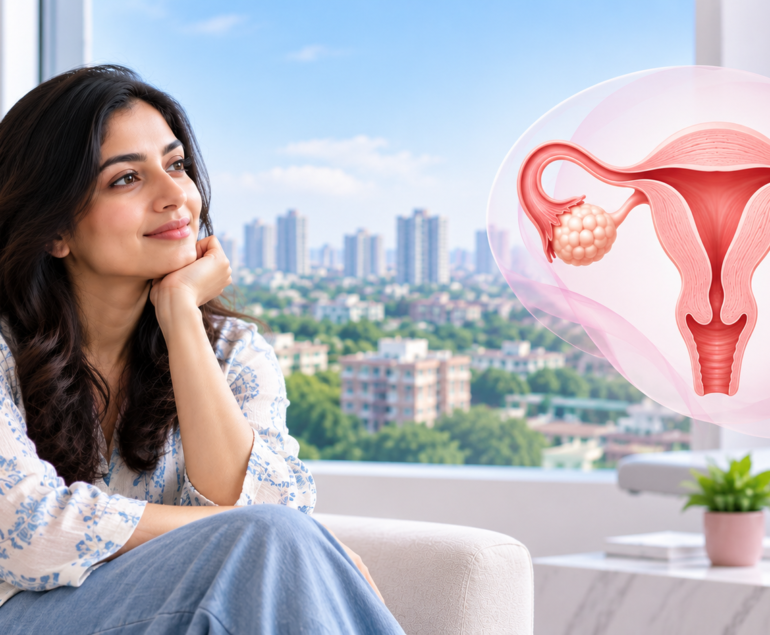
Fibroids are another everyday finding. These non-cancerous growths in or around the uterus may cause heavy periods, pelvic pressure or pain, or no symptoms at all. Having a fibroid does not mean you need an operation. Size, number, position, your symptoms and your plans for pregnancy decide the way forward.
When a procedure is genuinely needed, I prefer minimally invasive options where they suit the case. I perform laparoscopic and hysteroscopic procedures, and I’m also trained in robotic gynecological surgery. Whether we choose observation, medicines, keyhole surgery or conventional surgery, I’ll explain the reasoning in plain language so you can decide with confidence.
Menopause, and how to reach me from Sector 15
The 40s and 50s bring their own questions: irregular cycles, hot flushes, broken sleep, dryness, low mood. Many women assume they just have to endure it. You don’t. I hold a Certified Menopause Practitioner (CIMP) credential, and I’m happy to talk through what’s happening and what can help.
I should be upfront about one thing: I don’t have a clinic in Sector 15 itself. Women from Sector 15 can see me at either of my two Faridabad locations, both a reasonable drive away:
Yatharth Super Speciality Hospital, Sector 20 Plot No. 9, Sector 20, Krishna Nagar, New Industrial Township, Faridabad, Haryana 121007 Monday to Saturday, 10:00 AM to 4:00 PM. Sunday closed.
Mediclub Gynae ‘N’ Neuro Clinic, Sector 21C House No. 857, Sector 21C, Faridabad Evenings, 5:30 PM to 7:30 PM. Thursday and Sunday closed.
Timings can change, so please call before you travel: +91-8178939442, +91-8130048652 or +91-9999093503. You can also message on WhatsApp at +91-8130048652.
Questions women from Sector 15 often ask
Do you have a clinic in Sector 15?
No. I consult at Yatharth Hospital in Sector 20 and at Mediclub Clinic in Sector 21C. Women from Sector 15 are welcome at either.
What can I talk to a gynecologist about?
Anything related to your reproductive and hormonal health: periods, PCOS, pelvic pain, discharge, fibroids, endometriosis, fertility, pregnancy, contraception and menopause.
Should I see someone before planning a pregnancy?
It helps. A preconception visit lets us review your history, earlier pregnancies and medicines before you conceive.
Does PCOS mean I can’t get pregnant?
No. PCOS can interfere with regular ovulation, but it is only one of several possible causes of delayed conception, and many women with PCOS conceive with the right guidance.
Do fibroids always need surgery?
No. Many never need treatment. It depends on symptoms, fibroid size and position, and your plans for pregnancy.
When should irregular periods be checked?
If cycles stay irregular, stop for several months, change suddenly, or come with other symptoms, it’s time for an evaluation.
Can I see you for menopause symptoms?
Yes, whether you’re perimenopausal or well past your last period.
A last word
If you’ve read this far because something in your own body has been bothering you, please don’t wait for it to get worse. A short conversation can often bring clarity, and sometimes plain relief. Call, book a time, and come in. I’ll listen first.
This article offers general health information and is not a substitute for a personal consultation, examination or diagnosis by a qualified doctor.